Petar Sucic: Croatia and Inter Milan’s succession plan
3.89 million people. Almost ⅓ less than the population of London. 15 times less than the population of France. 20 times less than the population of Germany. 173 times smaller than the United States of America
But size doesn’t matter. Not if you’re the Croatian national team.
Across the two and half decades which have spanned the 21st century, you’ll struggle to find an international team with a midfield core as strong as the one the land of a thousand islands possessed in their golden era. Ivan Rakitic, Marcelo Brozovic, Luka Modric, Matteo Kovacic. As Croatia reached a World Cup final in 2018 and followed it up with a semi-final in the tournament’s next iteration, a nation with a population ranking 32nd out of 45 European countries, displayed a quality and balance of footballers which the rest of the world could do nothing but stop and and marvel at.
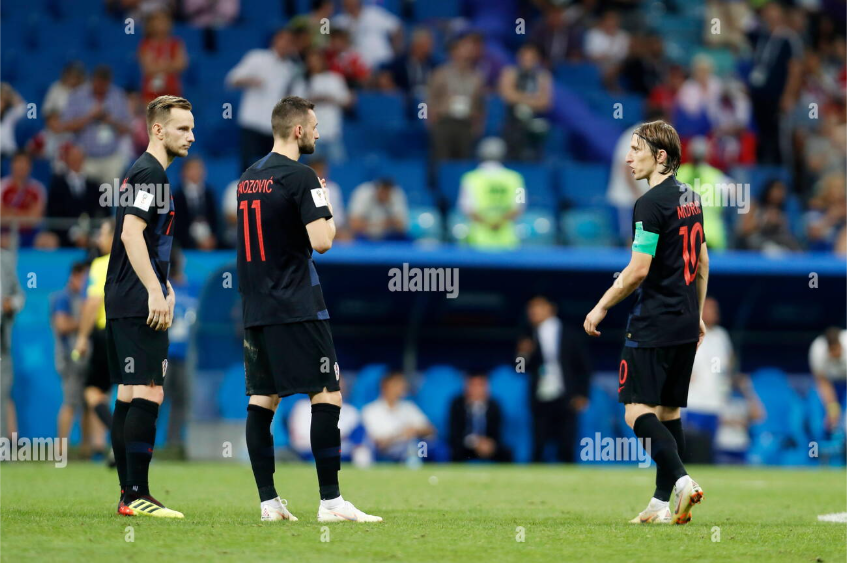
And what’s more interesting is of the four names mentioned above, the last three all bloomed from the same academy. And the next Croatian maestro announcing himself on the European stage, so too once belonged to their prestigious ranks.
For Dinamo Zagreb, a club situated in a city with a population you could fit in London nearly 9 times over - is home to one of the biggest midfield talent factories in the world. But this isn’t a coincidence, a random spike of fortune or a consequence of cyclopean financial power. This is meticulous. This is a result of years of education and analysis, constant evolution and reprogramming.
This is the academy which has hurled Croatia onto the map of the footballing world.
The style of football a nation plays, and the footballers they produce - can be firmly linked to their culture. National teams are a reflection of a country’s cultural attitudes and the players are so too. In the same way that Neymar is obviously Brazilian, Declan Rice is so obviously English just as Pedri had to be Spanish.
And Croatia are slowly moulding their own prototypical player. Technically savvy, versatile, unassuming, quick-minded. Ivan Perisic, Josko Gvardiol, Mario Mandzukic… all fit under this umbrella as well as the names of the midfielders mentioned before.The national team has a great marriage between the technical and physical elements of their game. They run hard, defend with their lives and they play quick, vertical football keeping the ball on the floor.
Are these things a reflection of the culture of Croatia? What the typical Croatian person values and has been brought up with?
The approach Dinamo Zagreb takes to producing elite footballers reflects the way Croatians conduct themselves on the pitch. It’s rigorous and all-encompassing. Not a detail is left out. Education is of the utmost importance. So too is ensuring your players are ‘good people’ away from the sport.
Dinamo Zagreb is by far and away the biggest club in Croatia and so the most talented youngsters in the country often end up there. They look for players who can show intelligence and most importantly have strong technical foundations. Size and physicality is secondary.
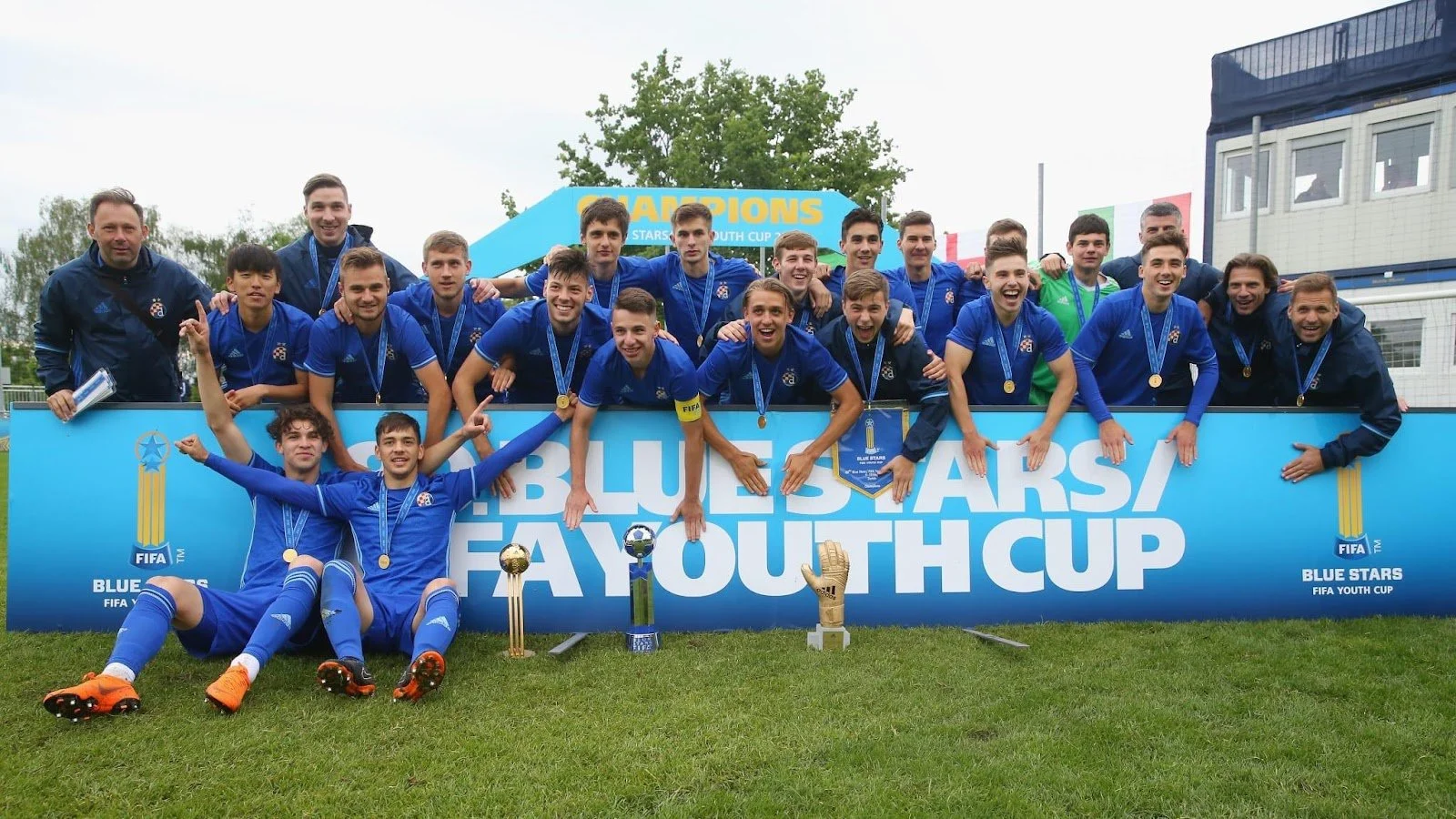
Dinamo Zagreb celebrating their FIFA youth Cup win in 2019 - Image via breakingthelines.com
There’s an onus on the fact they know they can’t keep their players. The club is happy to sell because that’s what keeps them dominant in a league where broadcasting deals and sponsorships leave little impression. And when player sales are so important to the way your club operates, you better make sure you’re producing players that people will pay good money for.
Technical quality is the pillar of Dinamo Zagreb. Through the academy system there’s 104 technical aspects that players are expected to master by the time they reach u15s which start simple and grow more complicated as players progress through the age groups. Players have to be able to play two positions almost equally and are encouraged to express themselves and be creative. There’s an emphasis on the small details. How to open up your chest to the field of play when you receive the ball; how to combine with the third man. Training sessions are dominated by everything to do with what you do when the ball is at your feet. Most top academies do this, I’m sure. But I doubt most dedicate the time and energy into drilling into each and every player the way Zagreb does.
“Master the ball, master the game” is a quote from Dinamo Zagreb U8s-11s coach Marko Cindric. And whilst it’s not exactly revolutionary, it does enough to epitomise what the ethos of the club is.
So when you see players, particularly midfielders, move to the European big leagues, be assured that technically they’ll always be one of the best players on the pitch. And when one of the biggest clubs in the world pays over £20 million for a 21 year old who’s name is an unknown entity in most European football circles, they’ve maybe spotted something others haven’t.
But now people are waking up and realising what Inter Milan saw when they decided to buy Petar Sucic in June 2025.
Whilst many music-enthusiasts are criticising the lack of a talented and organic hip-hop scene in the UK, there’s a new wave of talented individuals creating a lane for themselves in a diluted environment where the chart-toppers aren’t typically the ones with the talent. Spearheaded by producers BexBlu, Wilfred and Awaiting Kvng whose popularity soared after their idea to lace some of the most iconic UK grime freestyles with more mellow, jazzy production went viral on tiktok, the likes of Saiming, J2, CapitalA, JXMESC are starting to create headway in the UK music scene. I admire them because they’re all coming up together - featuring on each other’s tracks, supporting each other on social media and knowing in the back of their head that a rising tide lifts all boats. Hip- hop fans, give any of them a listen - you won’t regret it.
Of these new-wave rappers, is one named Paul Stephan. And Paul Stephan has a catchphrase he likes to drop before he starts rapping.
“Always moving.”
And that’s the perfect introduction to the player Petar Sucic is.
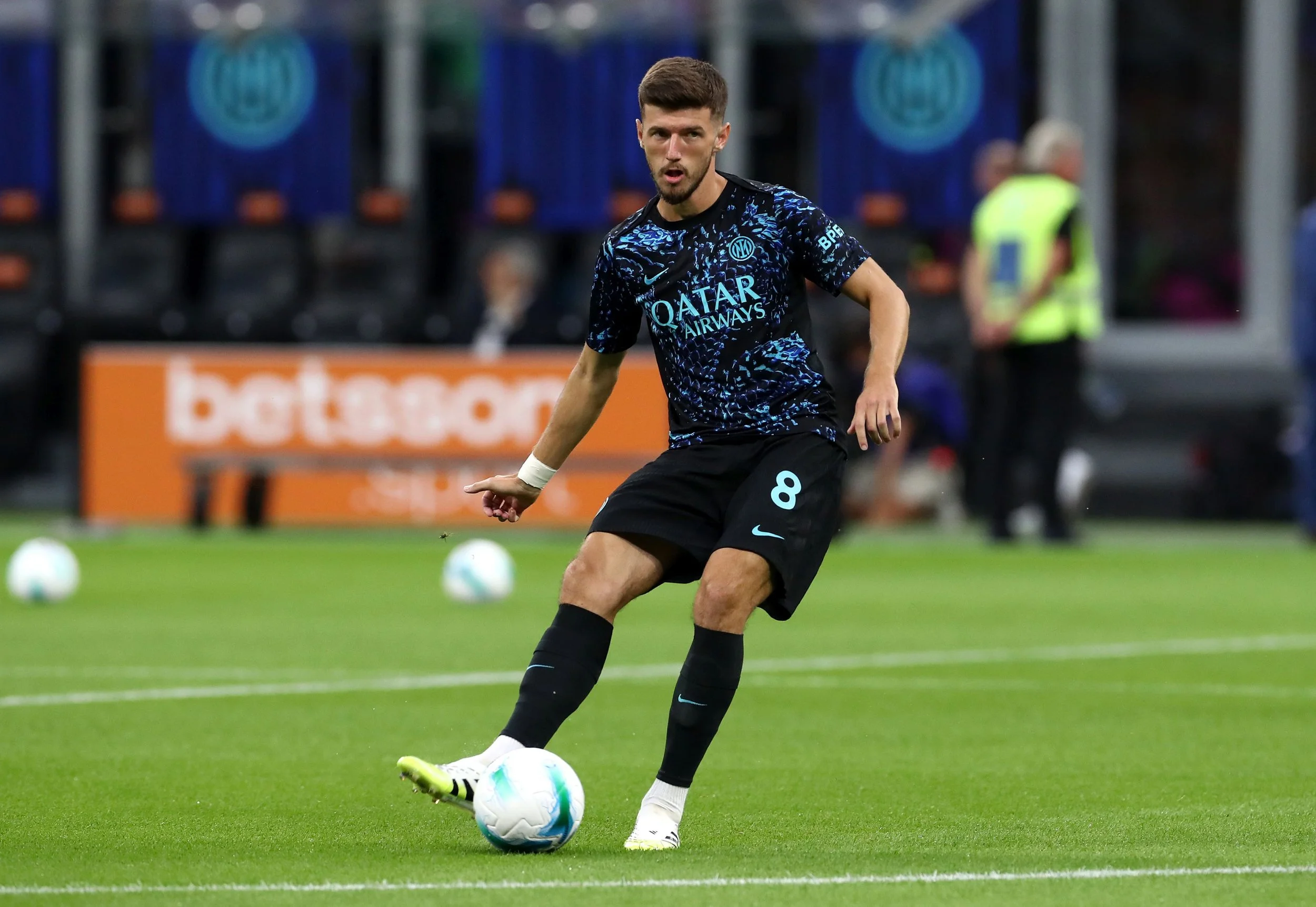
Image via sempreinter.com
Sucic spent most of his life living in Bosnia and Herzegovina and like many of his other compatriots, his upbringing was grounded and family-oriented. He lived on a farm and spent most of his adolescent life outside. As the captain of Bosnia’s U19 and U21 sides and his youth teams in Bosnia, his stock was appreciated early. Sucic’s choice to switch allegiances came as a result of his brother, Luka Sucic, who represented Croatia years prior to the decision - and the close ties he says he has with Croatian relatives.
A player who stays off social media as he prefers to spend time with his friends and family, Sucic conducts himself on and off the pitch with diligence and humility. Back in his youth days, scouts were impressed by his hard-work and athleticism and that’s likely what attracted Zagreb when he moved there in 2022.
Off the ball he does the pressing work of two players. On the ball he’s everything Dinamo Zagreb were trying to instill into their players. He does the simple things very well. First touch, exemplary. His passes are precise and zippy, but most of all it’s his intelligence and ability to already have a clear picture in his mind before he’s about to receive the ball which stands out.
Sucic, because of the way Zagreb develops their players, has been used in a variety of roles for Inter Milan. Sometimes he’s one of the two deepest midfielders, sometimes he’s a shuttling number 8 and occasionally he finds himself dovetailing as a number 10. In each of the three, he’s net positive.
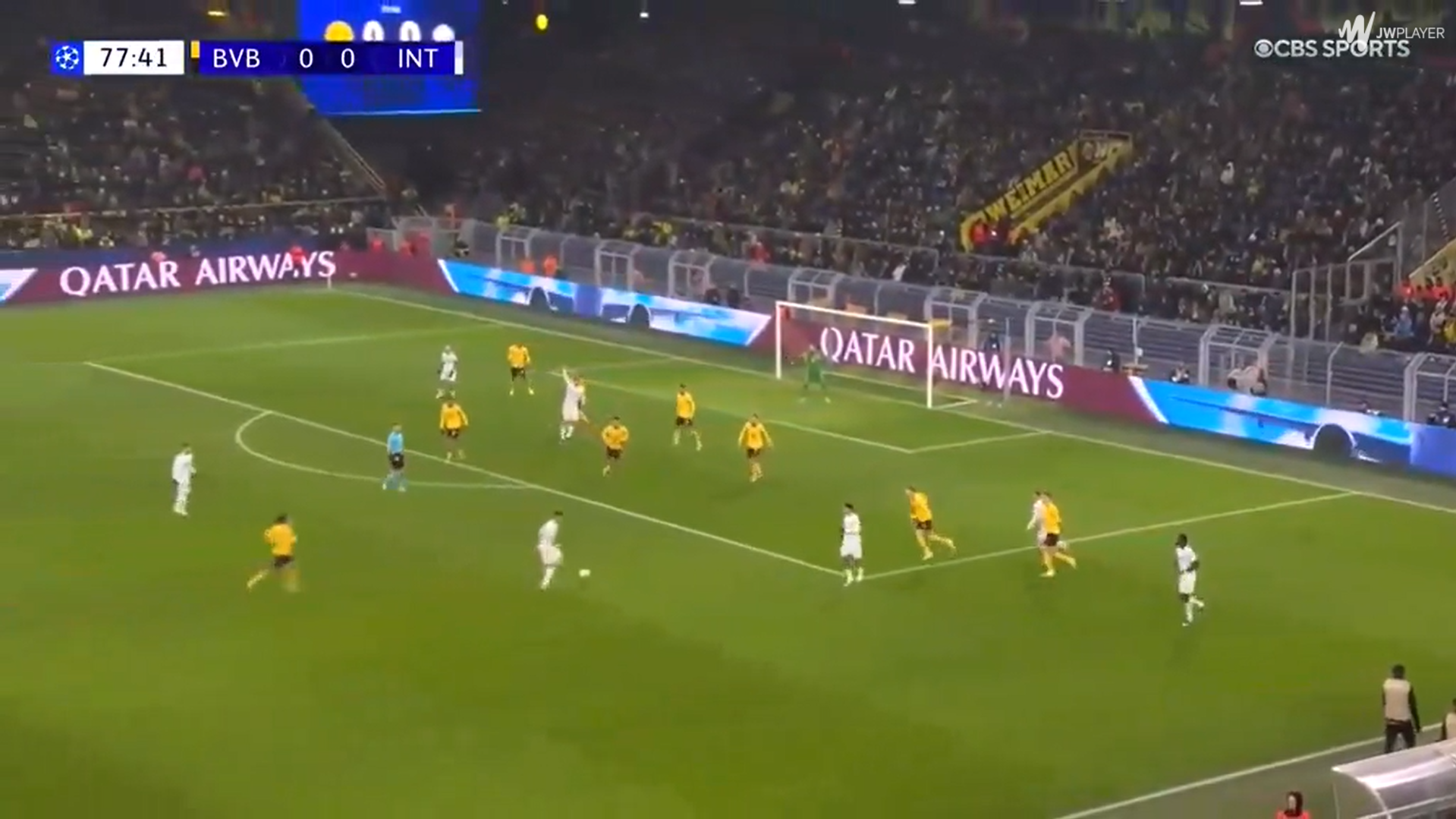
Sucic receives the ball on the edge of the box
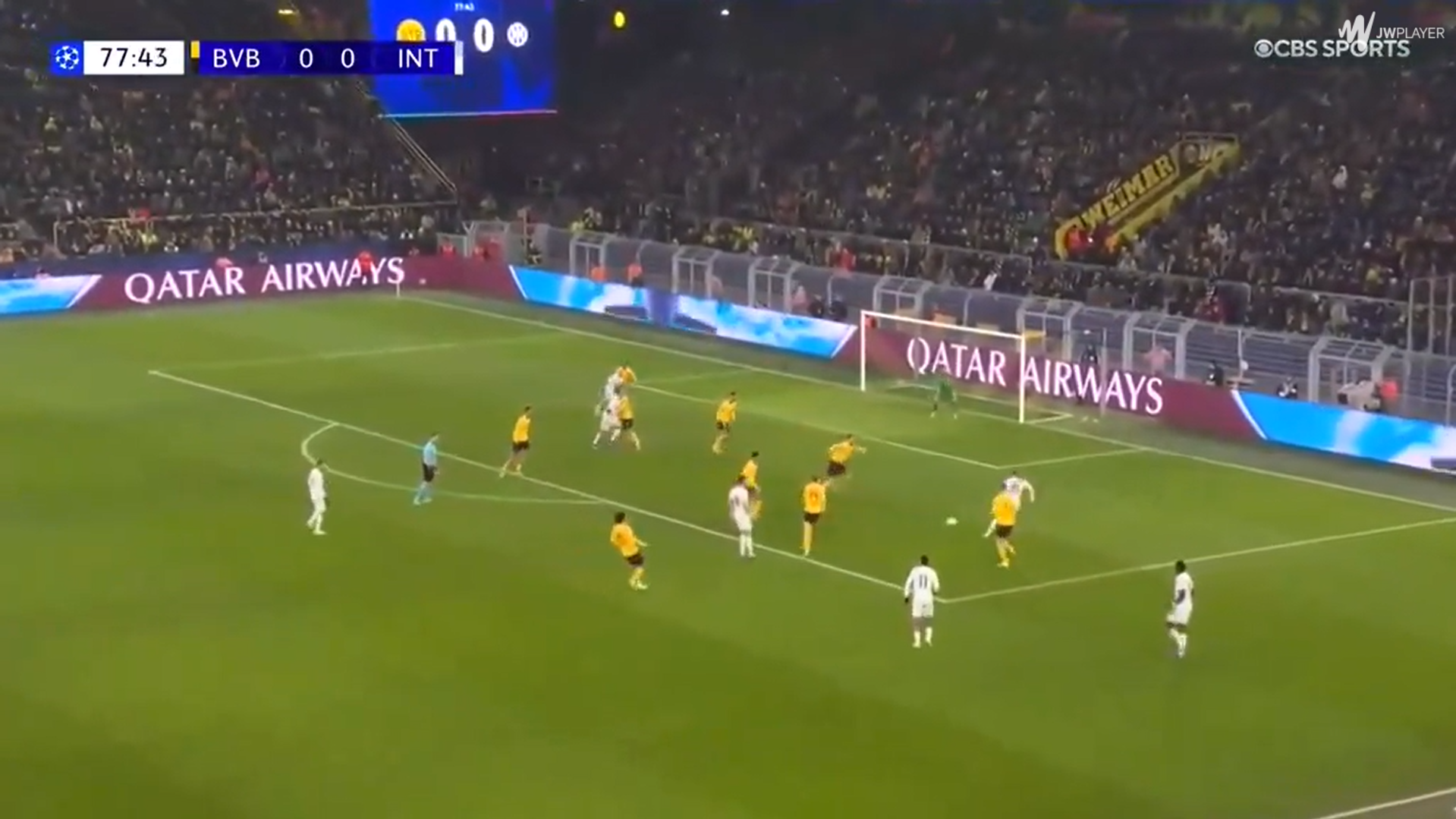
Knife through butter.
The right-footed midfielder has played 46 games thus far for Italy’s most revered side. Around a half and half split of starts and coming off the bench. The 2,347 minutes he’s played shouldn’t be sniffed at either considering Inter’s midfielders are some of the most accomplished at their craft in Europe. He’s fighting with Barella, Calhanoglu and Zielinski for game time but he’s fought admirably.
The best players make their teammates better. Sucic fits this bill. He’ll pass and immediately move to create space by running beyond the attacker or to receive it again. He’s got a great feel for the game, wherever he should be on the pitch to support the team - that’s where he’ll be.
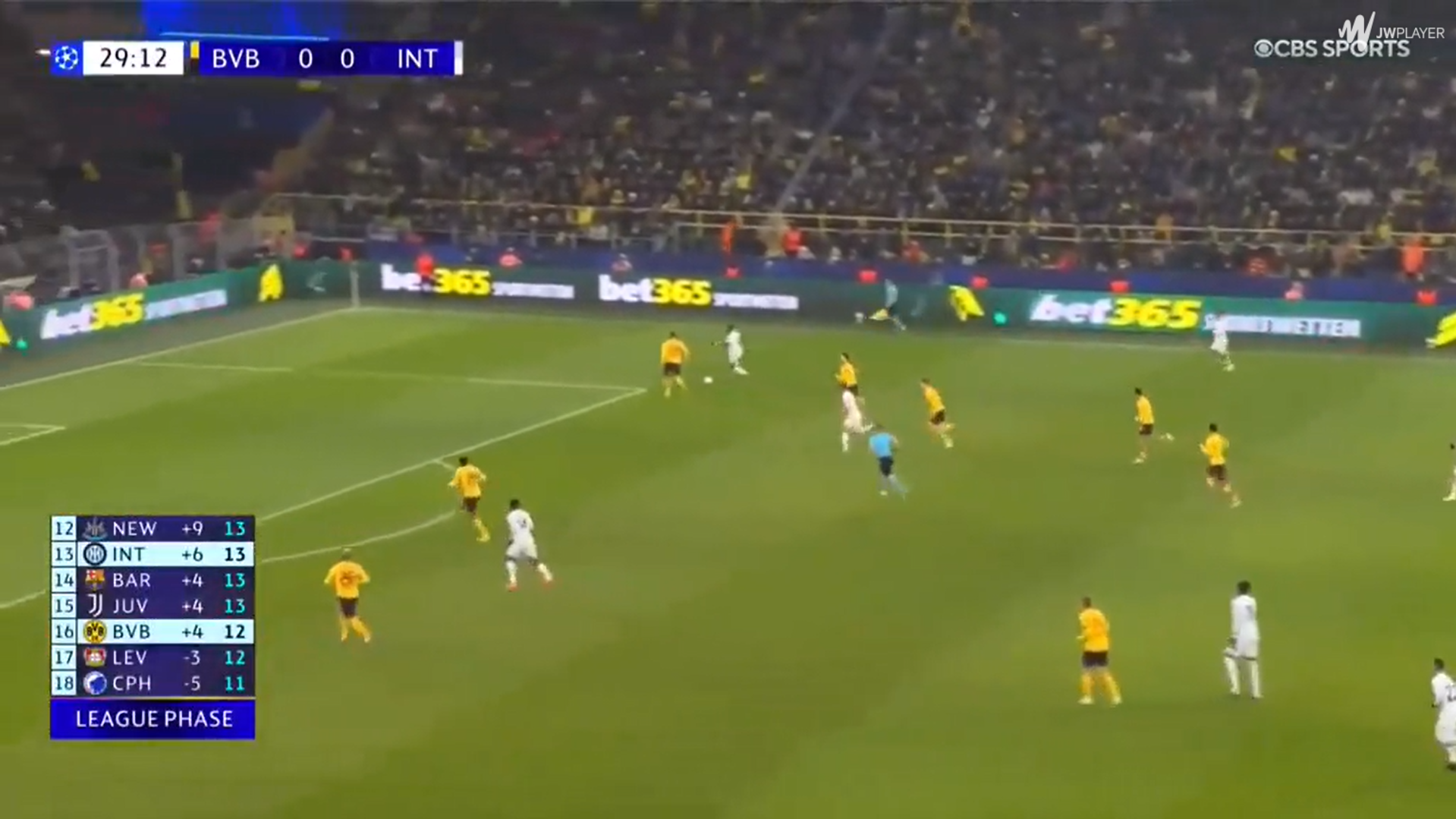
Sucic (on the left of the ball) passed the ball to Ange-Yoan Bonny and his first instinct is to attack the box to and support his teammate
There’s no ego involved. A selfless player who does what he’s told but does it brilliantly. In a nation infamous for giving young players very few chances, whilst playing for the best team in said nation - there’s a reason he’s so trusted by Christian Chivu. Sucic is a manager’s dream because he puts the team first, always.
But don’t think this is your run-of-the-mill simple midfielder who can only run and play the simple passes. What separates Sucic from most is he can do all of that but he’s got a wicked imagination to go along with it. There’s a wonderful deceit to the Croatian’s play. You think he’s strolling around in 2nd gear but all of a sudden he’ll receive it and leave you for dead in two touches.
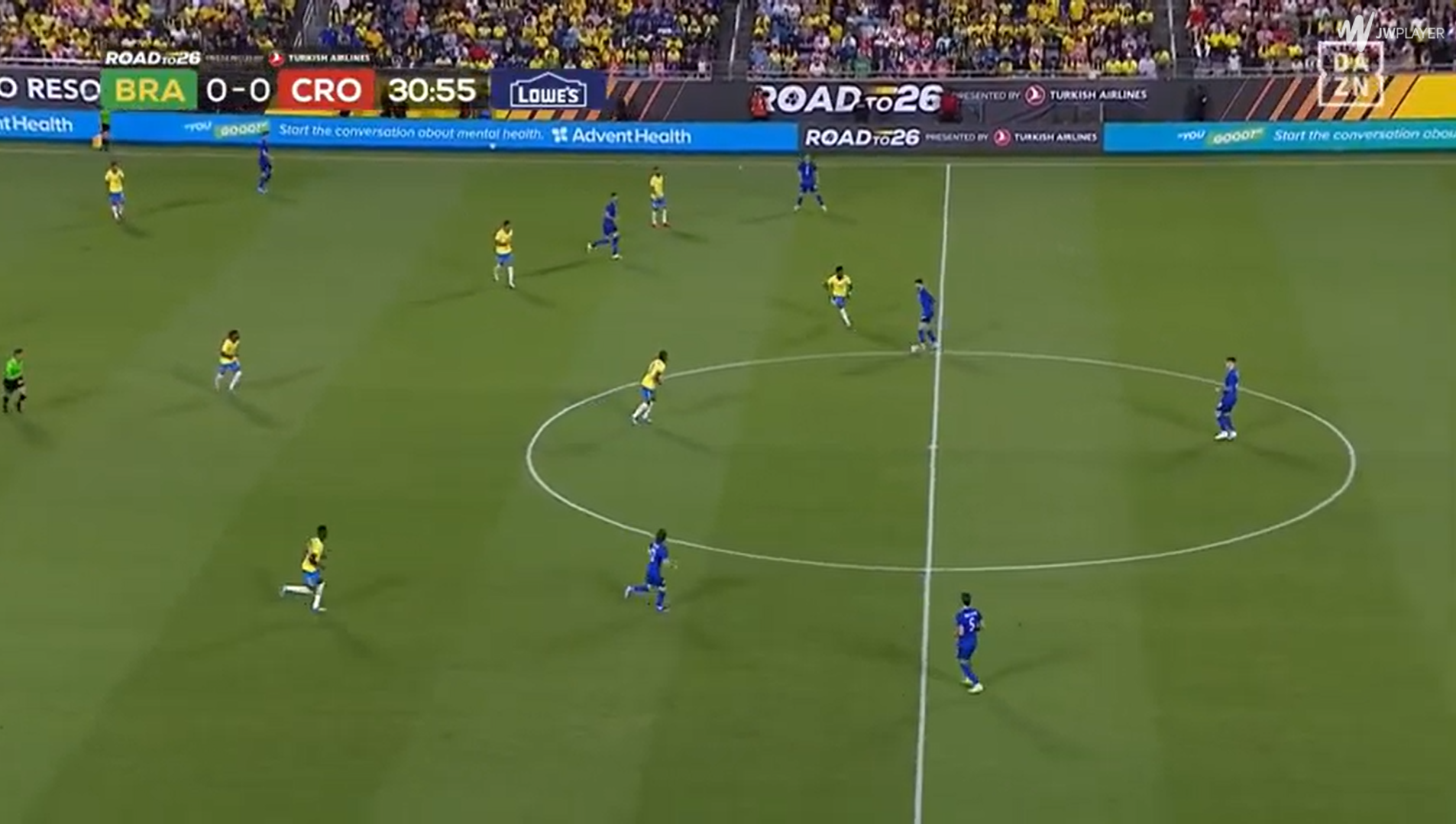
Sucic (with the ball) has the ball and is being pressed by Vinicius
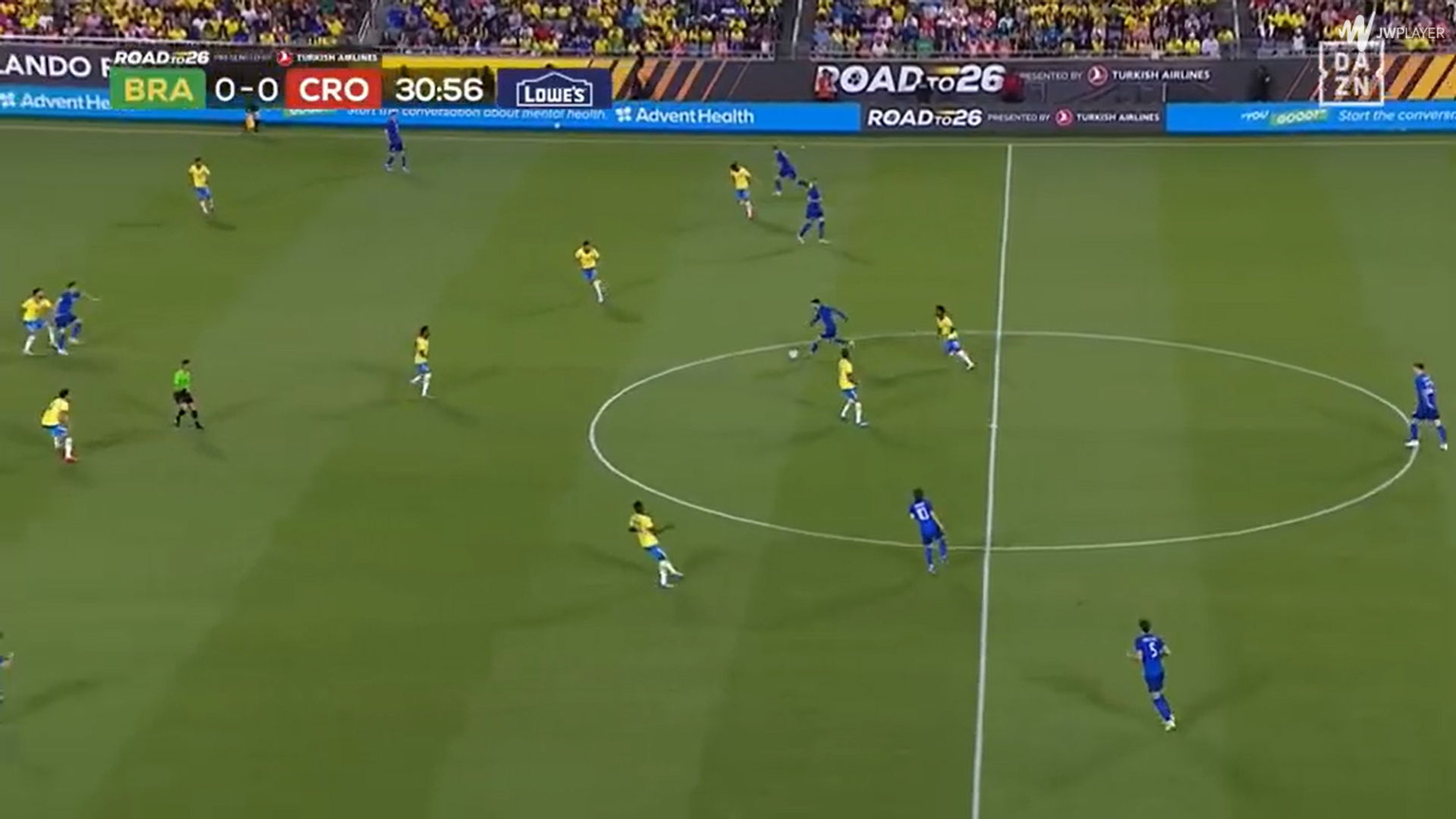
2 touches later…
Standing at 6ft, he has a slender frame which he uses well to shield the ball from his opponents. He’s got a nice burst of pace to get past his man coupled with a balance and poise on the ball which makes him always look as if he’s in control of the situation. When he runs at pace, the ball stays glued to him. He can change direction, stop and start quickly and the ball won’t leave his side. The mind’s quick but so too are the feet. Sucic can weave past players because he dribbles with both feet, can drop a shoulder and use his arms to fend off opponents. That’s Dinamo Zagreb written all over.
The midfielder’s trademark is his fake-shot when he’s around the box. 4 games I watched only him and he did it in three of the four. It’s almost Palmer-esque when he’s on that right-hand side but instead of using his instep like the Englishman, he uses his sole to change direction. He is also a talented finisher, though from far out he leaves more to be desired. He can whip a ball into the corner and has a finesse in the box. 7 goals in his final season at Zagreb shows there’s definitely a bit there.
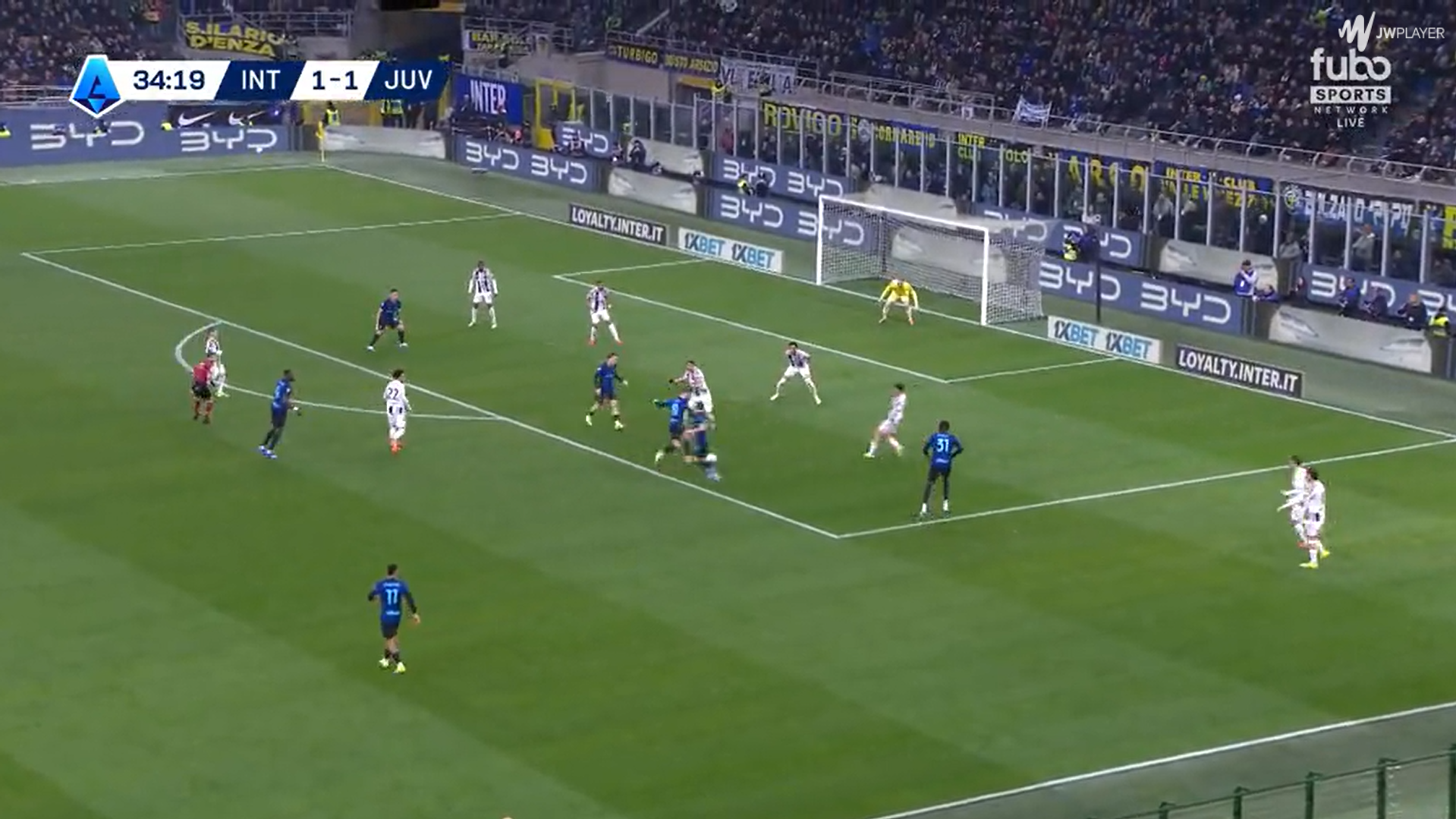
Sucic ready to pull the trigger against Juventus
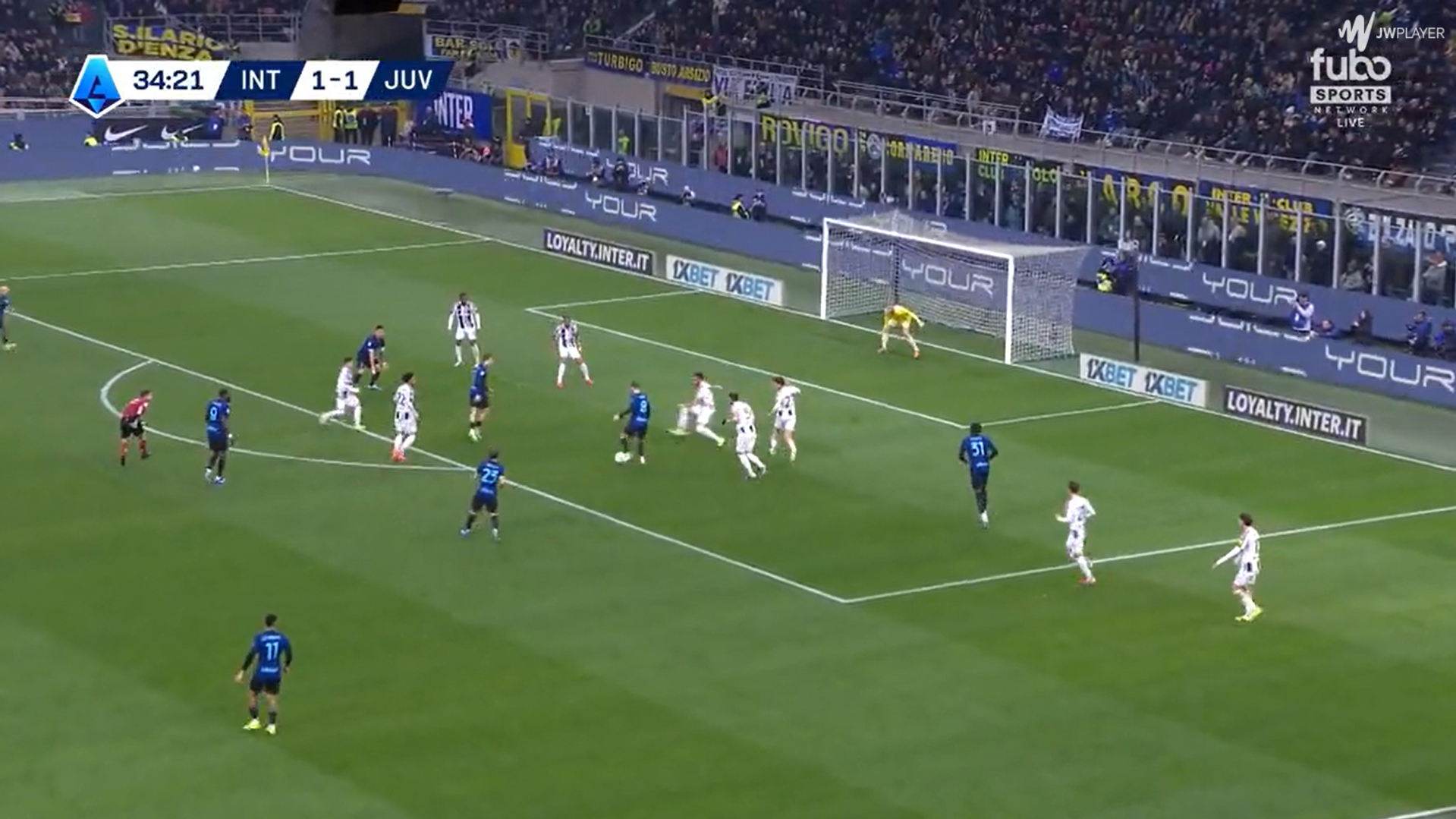
Just joking. 3 players sent for a hot dog
Another great thing about Sucic is that he loves to dribble with the sole of his foot. Players who played a lot of small-sided games often see this skill through with them into senior football. It gives a sense of control at times where the pitch often seems congested. You can manipulate the ball in ways you wouldn’t be able to if you used your laces or instep. And it looks bloody nice when it comes off.
Often when players are around the edge of the box and there’s so many players around them, they can become overwhelmed. There’s a plethora of decisions you can make, the best players can digest this information quickly and pick the best option. As you can see from the photos above, Sucic remains calm in places where many midfielders would move erratically. He can dribble or pass his way out of tight situations because he processes his environment better than most. This might be Zagreb again, but usually that’s the sort of talent that you either have or you don’t.
In terms of passing, Sucic is good. He’s good at most things. He can use different surfaces of his boot to fulfil his wishes and can break lines when he needs to. He doesn’t actively try to play those defense-splitting passes every time he gets the ball, he’s pretty risk-averse in that regard. But if he notices a chance to do so, he’ll do it without hesitation and the result is often a pleasing one.
Both for club and country, if he’s tasked to take responsibility in midfield, he’ll do so. In spells, often later in games when Modric or Calhanoglou have been taken off, Sucic will drop to be the main progressive hub for his side. What follows is a sleek performance in which the 22 year old will play quick and vertically when the team requires it, and slows things down when that’s what is demanded. It’s La Pausa. It’s what every top Croatian midfielder has.
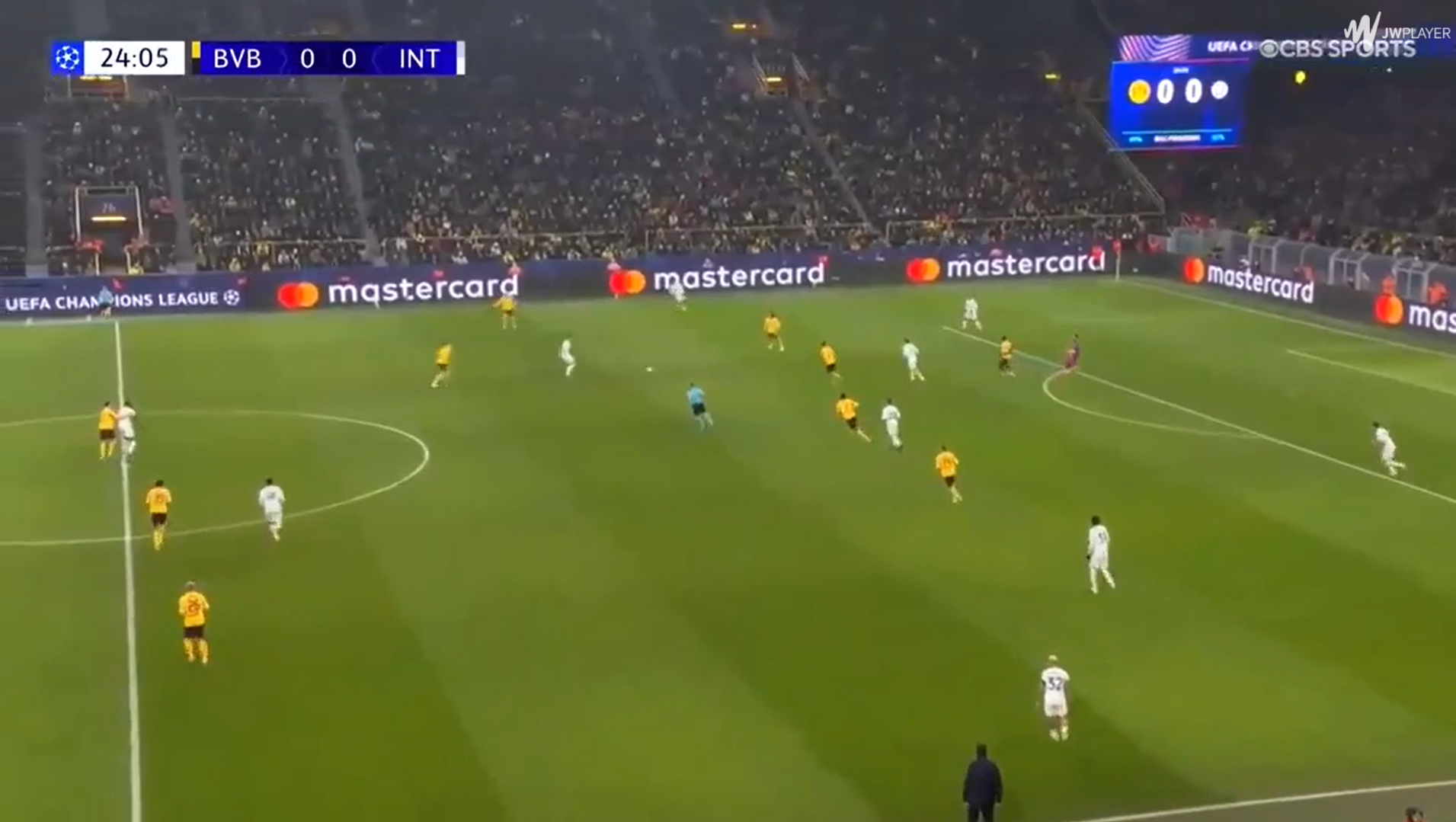
Sucic about to get pressed from behind as he takes his first touch
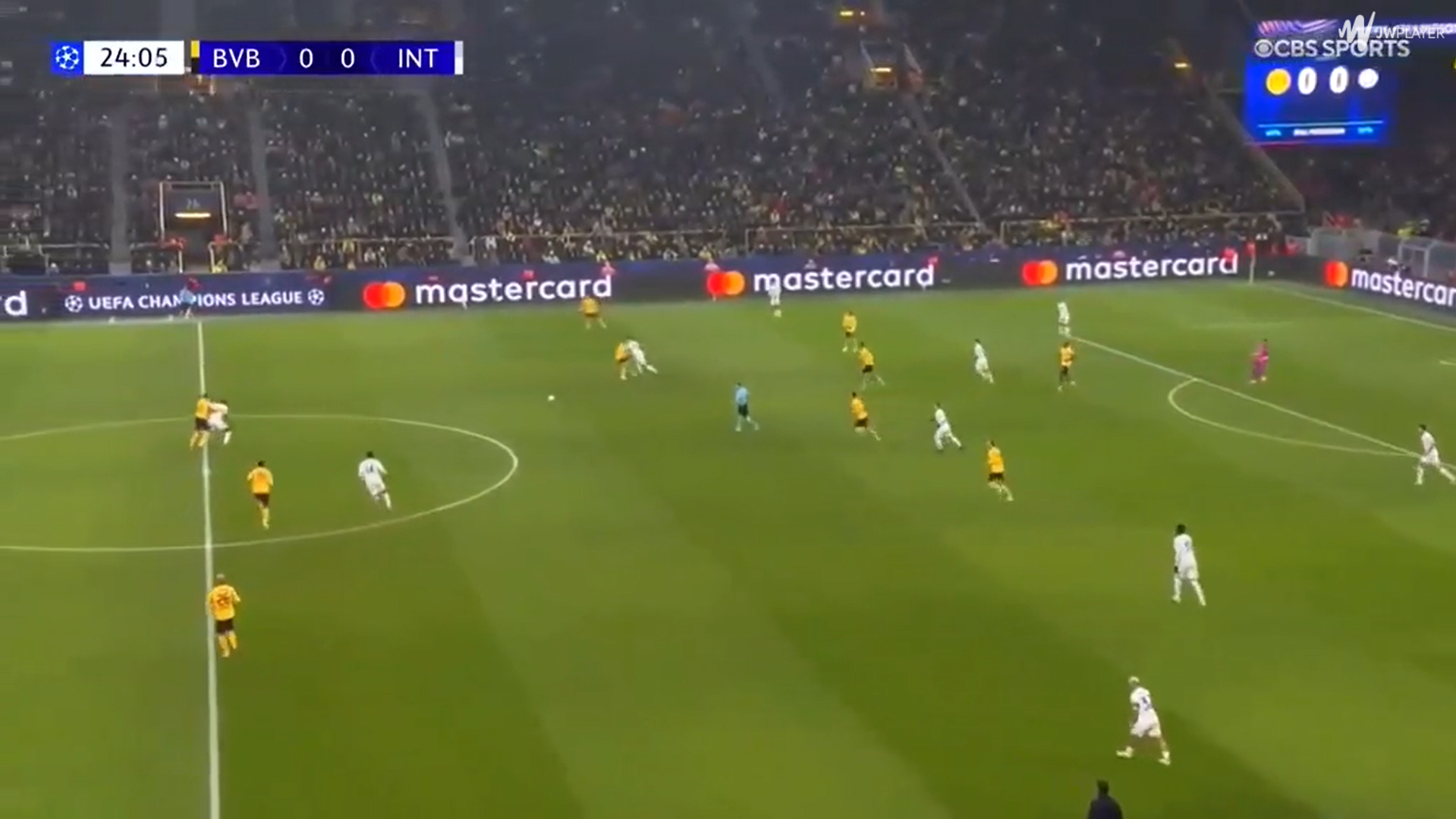
Flicks the ball behind him instead as he knows Bonny is there
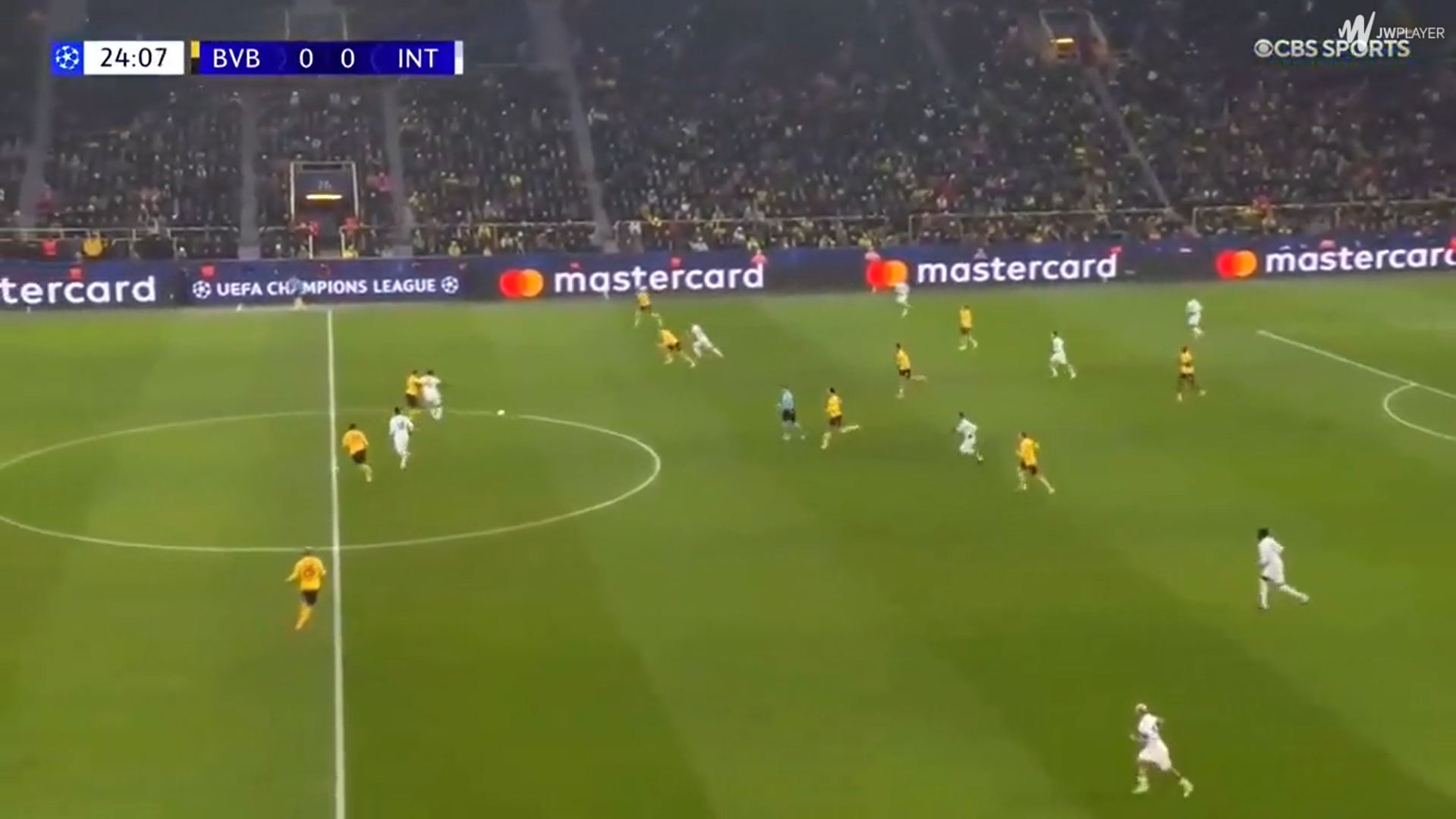
Bonny gets it at Sucic runs on to support
My biggest gripe with Sucic is that sometimes I think he’s too nice. In physical duels, when your knack of timing or ability to read situations is out the window, and it just comes down to who wants it more - Sucic can be left behind. He’s not someone to go and smash into a player to lift the crowd. Sometimes it’s good to have a midfielder who can do that.
Does he have that dog in him?
That’s the question I ask myself when he doesn’t have the ball. He has the long legs to make recovery tackles or to nip in and win the ball but can he be a bastard? Maybe some time in Italian football will turn him into one. When the situation’s awkward, a loose ball or a ball bouncing in the air, he looks uncomfortable. A lot of players who like the ball on the ground can be a victim of this because it’s putting them outside their comfort zone. Sucic needs to get better at reading these situations and putting his body on the line without thinking he might get hurt in the process.
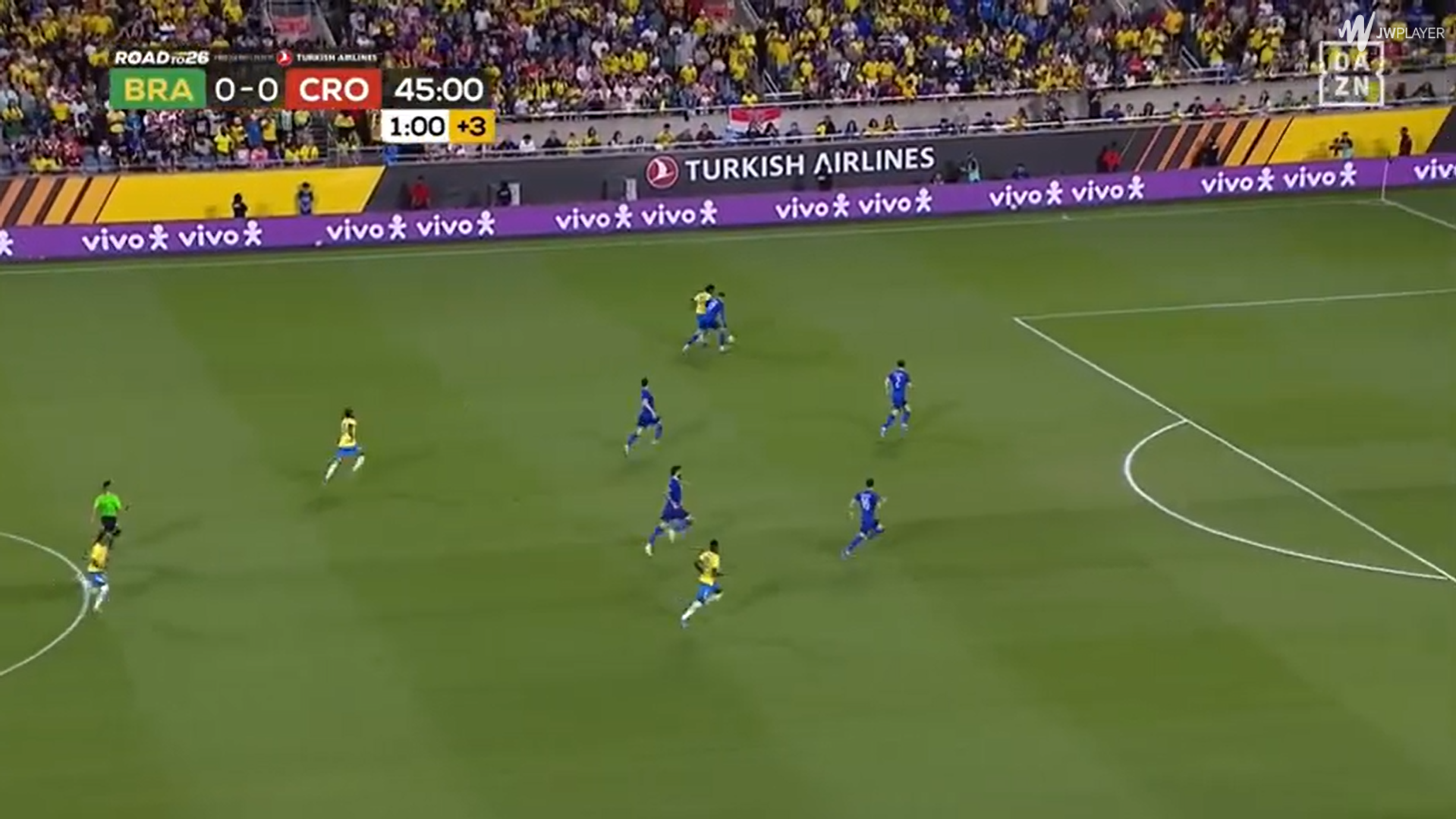
Sucic has Vini facing away from goal, right where he wants him
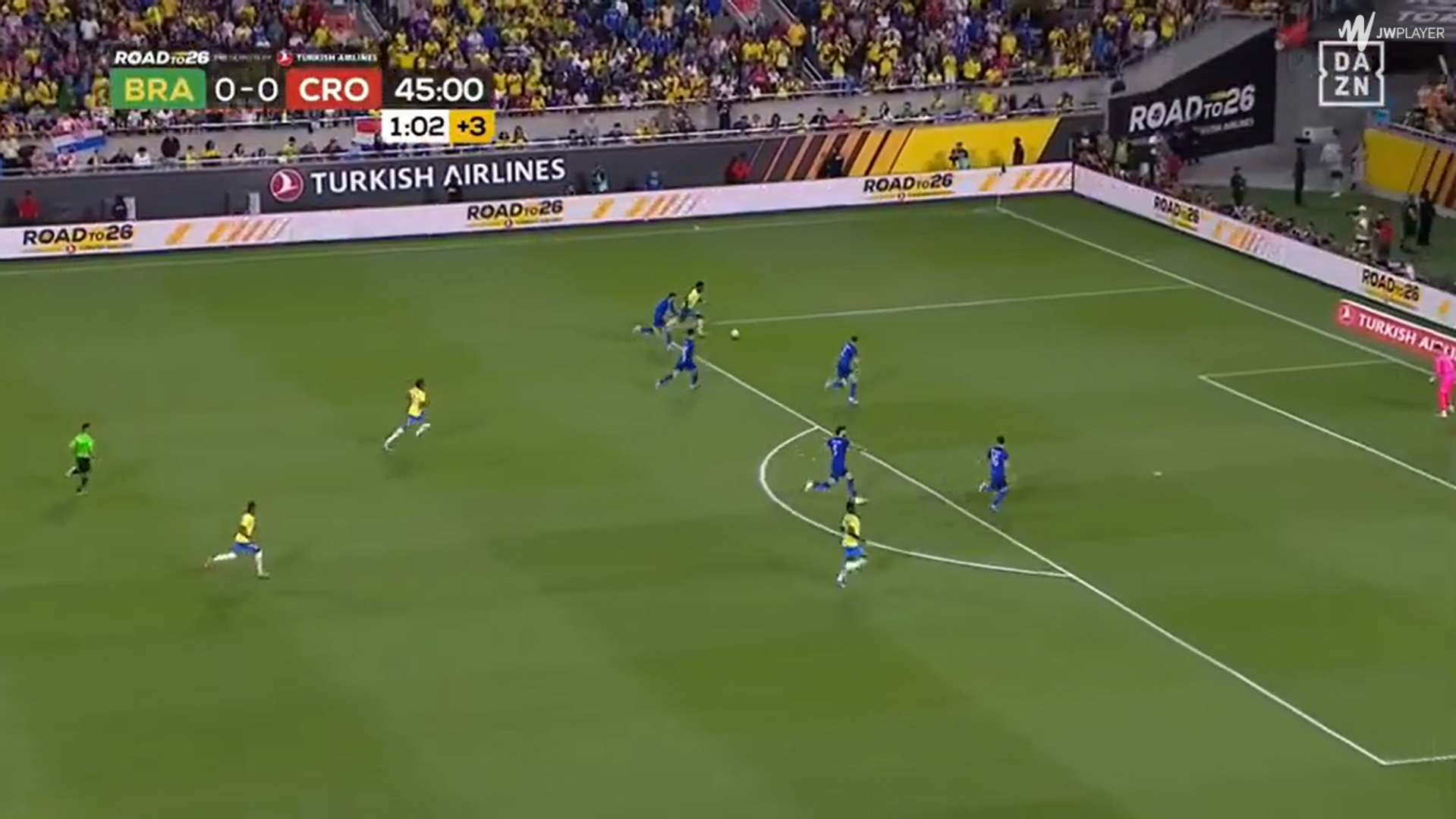
After a half-hearted attempt to tackle and win the ball, Vini is away from him
There’s also a question of his left foot. Which is by no means awful. He can perform simple passes on it and isn’t overly reliant on his right when he’s dribbling. But he seems to only ever use it when there’s truly no other option, especially when what he’s doing is more complicated. Twice, I saw him put a cross in on his left and it looked awkward and didn't reach it’s intended target. A few times he had the opportunity to shoot in and around the box on his left and he refused to do so. That’s not a pretty look.
Whether it’s a confidence issue or his weak foot truly isn’t good, it’s a red flag. Not a glowing, vociferous red flag. But a small issue that maybe needs to be worked on.
All in all, Dinamo Zagreb and Croatia know how to produce great midfielders. And I think with Sucic, and after the gradual declines of Rakitic, Modric, Brozovic and Kovacic - they’ve unearthed the next one. He’ll be a vital part of their next generation (which is actually much more promising than you might think) and will likely anchor Inter Milan’s midfield for the next 5-10 years.
I think a footballer’s playstyle reflects their character - especially what they’re like when they don’t have the ball. Sucic is a selfless player who’ll always sacrifice himself for the team and that tells me he’s a good person on top of being a great footballer. He’s a plug and play type who will raise the floor of your team no matter the role he’s filling.
You don’t need a perfect system or collection of the right circumstances to get the best out of Petar Sucic. If you have Petar Sucic in your midfield, he’ll get the players around him.
Can you quantify that?
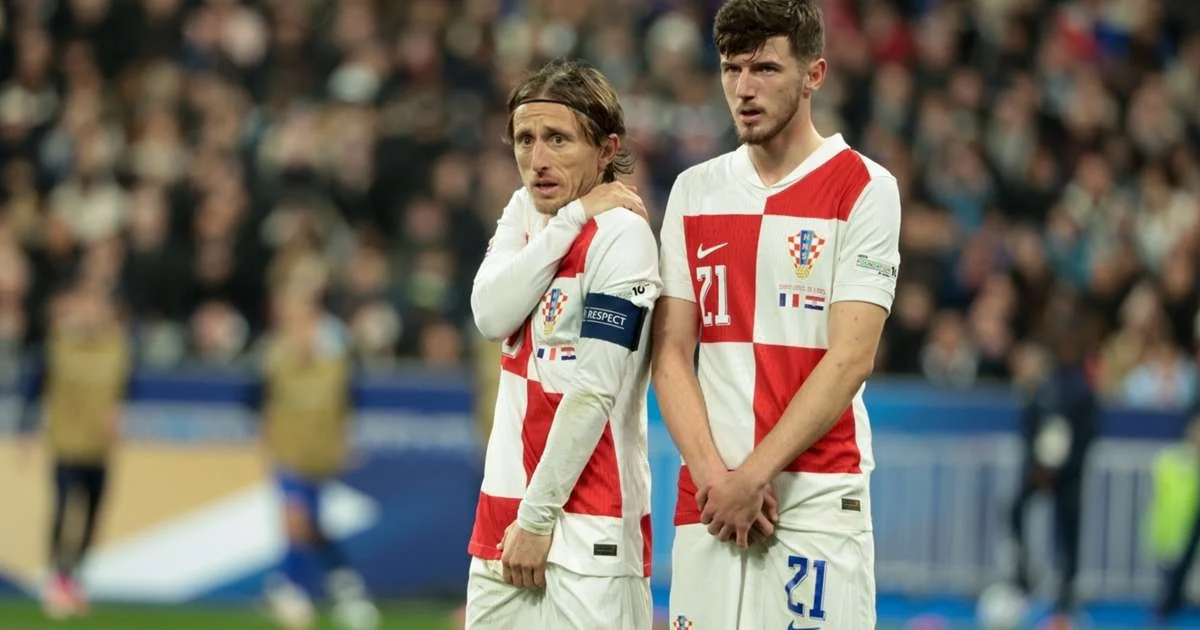
Past, present and future - Image via Fotmob.com
