Fixing football: Breaking wheel and releasing the shackles
For decades, Jazz was built on complex chord changes (Bepop). Musicians were to follow a strict map of shifting harmonies - technically impressive but required a complex knowledge of a plethora of rules in order to carry out. Miles Davis decided there was no need to play so many chords. He put the control in his band’s hands and told them to feel the music and decide when they wanted to change the atmosphere and the chords
Miles Davis released this new iteration of jazz in The Kind of Blue, now the most successful jazz album of all time.
Us football fans are simple. We want to get off our bums as much as possible when watching the sport we hold dear. That’s all it is. We want to be entertained, mystified and dazzled. We want those who are so much better than us to prove why they’re the ones getting paid and we’re the ones paying to watch them.
As time moves forward, so do we as a species. We become smarter, stronger, more resourceful and more efficient. Football is no different. The average Premier League player today is fitter, faster, more technically gifted and more intelligent than the best the game had to offer 50 years ago. Hell, even 25 years ago. But if footballers have become so much better and are so incredibly talented, why is it that we’re so bored when we watch them?
Almost every high level game we see now seems like an iteration of a game we saw a week earlier. We can almost predict what a player’s going to do in real time as they receive the ball. We watch the football being bounced back and forth between goalkeeper and centre-backs for an eternity. We sigh when a winger has his full-back 1v1 on the touchline only to pass it back. We berate from our sofas or from the stands when a counter-attack looks to be on and a player decides to slow the game back down to a crawl.
The attackers. The imaginative geniuses who can truly decide games on their own with sudden spurts of magic - are touching the ball less and less. Goalkeepers and defenders, the ones who traditionally gave it to the attackers as quickly as possible to give them the chance to create, are touching the ball more and more. Gary Neville put it best:
"If we're constantly served up this crap where we are watching centre-backs, full-backs and goalkeepers touch the ball hundreds of times more than the most talented players on the pitch... that isn't right, the game can't be evolving in the right way."
But are we the dunces for expecting the evolution of the game to benefit the spectator? Who said evolution is beneficial for all? We’ve evolved from Romans and Saxons yet we’re still fighting wars just like they did whilst poverty and inequality is rife just like it was back then. Maybe evolution doesn’t actually equate to progress. Maybe football has always been destined for the state we find it in today.
Or is it just part of a cycle?
In an interview with The Times late in 2025, Thomas Tuchel’s assistant coach Anthony Barry was discussing the state of modern football: “We really feel the game has become stuck, particularly in the Premier League. Everybody is so good now. They have so much information. They know how to set up. Mid-blocks, deep-blocks…”
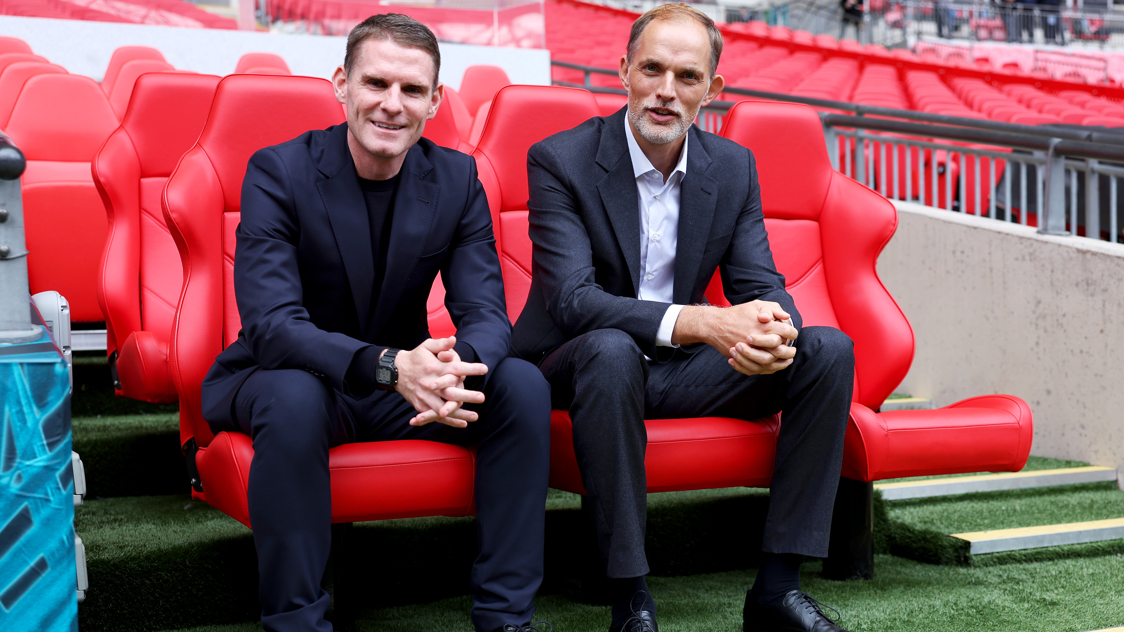
Image of Anthony Barry and Thomas Tuchel via BBC.com
On the Potshot podcast, Jon Mackenzie of The Athletic spoke eloquently of the ‘tactical interregnum’ we are currently seeing across Europe. The ‘positional play’ football championed by Pep Guardiola has been figured out. It’s kryptonite in the form of man-to-man pressing schemes and blocking the centre of the pitch. Coaches now know what to expect from teams and how it can be stopped. Physicality, athleticism and ground-covering is now synonymous with Premier League football only 15 years on from when Barcelona ruled the world with two midfielders small enough to dodge raindrops without getting wet.
So perhaps Pep’s run out of ideas and brawn has finally outwitted the brain. Juego de posición is coming to an end and we are…
Bored. Extremely bored. People don’t want to watch a sport where set pieces are treated like gold-dust and players are treated like robots. But can we also be optimistic? Because football isn’t surely destined to be like this forever. Great minds always find creative solutions to new problems and there’s a few great minds currently out there who might just have found one.
Luciano Spalletti’s name rings loud amongst those privy to Italian football. And there’s many reasons why. He’s occupied roles in the dugout of some of Italy’s biggest clubs such as Roma, Inter, Napoli and Juventus. He was the coach in charge when Napoli won their first Scudetto since the days of Diego Maradona and he was the man at the helm when Roma managed their highest ever points tally of 87 in 2016/17. 66 years old now and with over 1000 games as a head coach under his belt, the Italian has brought attacking football with him wherever he’s gone. But there’s something slightly different about the way he does this tactically.
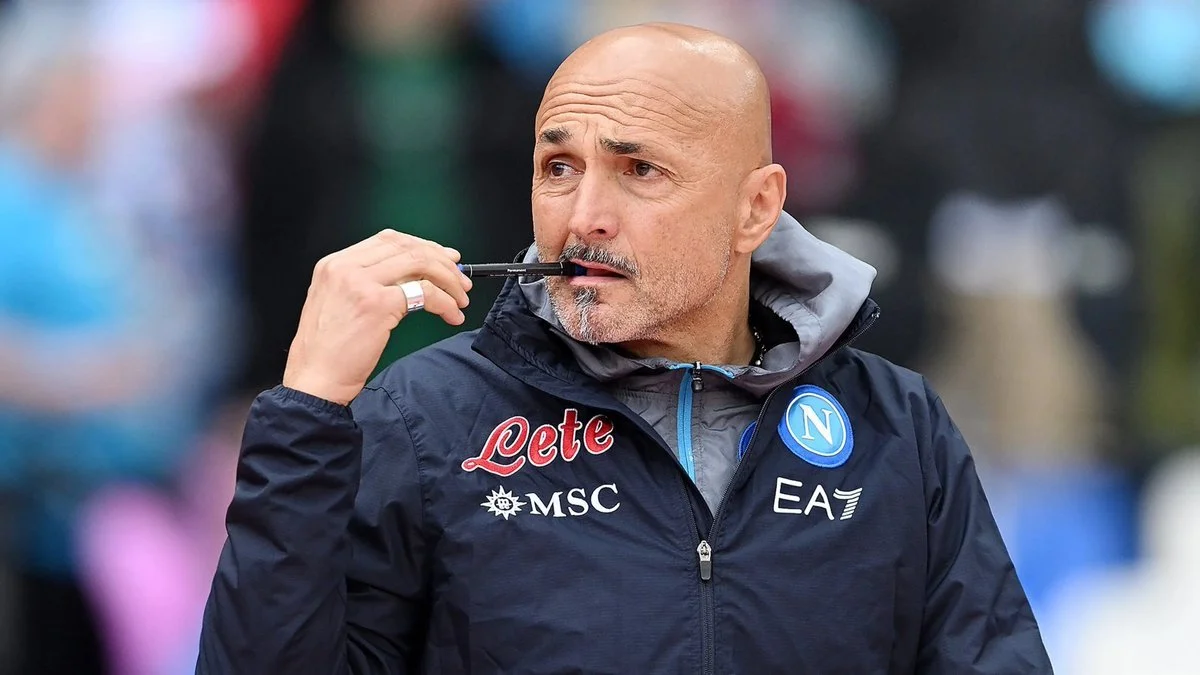
Image via @AntonioMagno4
Since Spalletti was appointed as manager in November 2025, Juventus have played 17 games and lost 2, scoring 29 goals and conceding 11 in the process. And what makes these stats even more impressive is in the manner that Juventus have gone about accruing them. Before the Italian’s arrival, the Old Lady’s fans, like many others around Europe, were fed up with the way their team played football. Juventus were extremely dull despite boasting one of the most exciting young attackers in the world in their arsenal (Kenan Yildiz) and having a plethora of European-proven forwards to choose from whenever they wanted. Even as a neutral, their games under Ivan Tudor, were admittedly an eyesore and when Spalletti took over, many doubted whether he’d be able to turn around a squad that looked devoid of inspiration.
But he worked his magic and he worked it quickly. Spalletti’s football is special because it’s wonderfully unpredictable. He’s a manager who becomes visibly frustrated when his team passes backwards instead of seizing an opportunity to attack. Spalletti challenges his players to recognise the space that has been left by opponents and to move accordingly. It’s why, if you watch a Juventus game, you’ll see Weston Mckennie playing as a right-back and then 5 minutes later making a darting run in-behind the two centre-backs. The players go where the space is as opposed to just occupying set positions.
That freedom and ability for players to interpret surroundings as they please means that Spalletti’s Juventus are wildly difficult to prepare for in a defensive sense. If you go man to man, it means centre-backs will find themselves in positions they don’t want to be in whilst midfielders and forwards become confused about who to follow and can be dragged out of position to open space. It’s football that gives the power back to the players to make the decisions instead of thoughtlessly carrying out a manager’s instructions. And that’s rare to see.
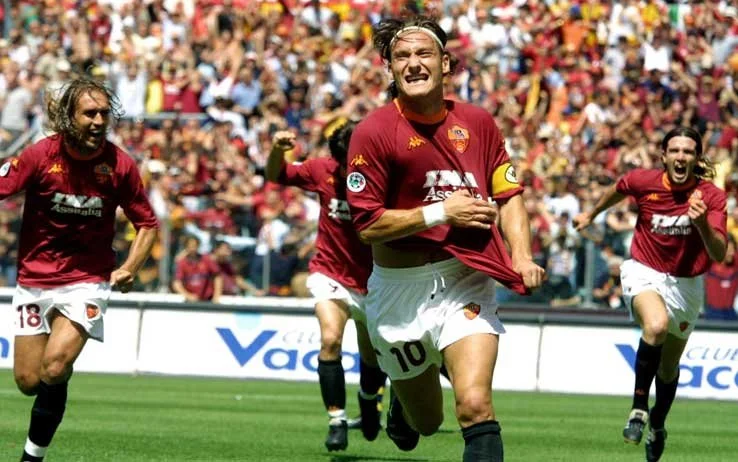
Spaletti was the coach who turned Italian legend Francesco Totti into a false 9. How would he have fared in today’s game? Image via TheGentlemanUltra on X
Another feature of Spalletti’s side is the use of the third man and quick one-touch exchanges to open up defensive schemes. Quick and intricate passing moves to create goalscoring opportunities are somewhat a lost art in this modern day climate but Spalletti is bringing it back. Juventus play quick and sharp football and always aim to play forward, it’s refreshing and perhaps serves as the template to dismantle the out-of-possession schemes we currently see.
A similar and more successful version of this brand of football can be seen in the current Champions League winners. PSG made a mockery of Inter Milan in the 2025 final who had no idea what to do with their constant rotations. Nuno Mendes was a striker at one point and a right back at another; Ousmane Dembele’s heatmap from the night was reminiscent of one you’d expect of a box to box midfielder. The positionless, free-flowing football that the Parisian club displayed during that campaign was special, not only because it culminated in one of the most one-sided finals we’ve ever seen, but because it was so good to watch.
And that’s the perfect marriage. Success whilst playing attractive football. A balance many managers have been failing to strike, constantly deferring to the former with little regard for the other. The footballing philosophy famed by Pep and imitated by nearly everyone else is reaching its natural end. Everyone knows how to combat it and rather than managers trying something new to gain an edge, they turn to the finest possible details of the game which are becoming maximised to the point of exhaustion.
There’s a manager in Italy who is playing by a different rulebook and a manager in France who briefly introduced that book to the world. They’re allowing the artists (the players) to paint blank canvases in real time. These managers know these players can come up with solutions to problems they could only dream of and so why not leave it up to them? It makes sense, to disrupt the control and methodical nature of football, you create chaos in the form of unpredictability. You allow players to be free, take risks and cause havoc because the opposition will have a much harder time containing it. Allowing artists to take centre stage is the natural rebuttal to a landscape so devoid of any creativity, it’s only a matter of time before other managers clock on.
Spalletti and Enrique are the trailblazers for an optimistic future. A future where footballers’ imaginations are free to run wild and spectators are again enthralled and captivated whenever they watch a match. It wasn’t too long ago where this was in fact the case and it won’t be too far in the future when we’re able to see the same again.
