Chelsea’s last lifeline: Liam Rosenior
29 days after thrashing Barcelona 3-0 and performing valiantly with 10 men in a 1-1 draw against league leaders Arsenal, Chelsea are yet again, back to square one.
Enzo Maresca has resigned and now the BlueCo owners find themselves in the all too familiar place of searching for a new manager to lead their young squad.
The main candidate for the role is close to home. Liam Rosenior (41) has been sister club Strasbourg’s head coach for just over 18 months and in that time has taken the youngest team in Europe to European football, playing a brand of football that isn’t vastly dissimilar to Enzo Maresca’s.
But what’s more important than the style of football he plays, is the person Rosenior is. Do his players respond to him? How does he ensure that such a young team is filled with confidence and determination to reach their limits? Rosenior’s man-management methods are modern and inspiring. He’s articulate and passionate in his craft, his ideas inspire positivity and hope, he might just be the one to return Chelsea back to their glory days.
Liam Rosenior is a half Sierra-Leonan, English-born, South London-raised manager with an extremely impressive CV so early into his coaching career. In 2018 he hung up his boots and by 2020 he was Wayne Rooney’s assistant manager at Derby. At this time, Derby were going through a gruelling battle to stay in the English pyramid and the atmosphere around the club was chaotic. After Rooney was sacked, Rosenior was appointed interim manager and remained in the dugout for 11 games - winning 6, losing 3 and drawing 2. It’s a highly plausible record considering the environment around the club at the time and that it was the Englishman’s first leading managerial role. He filled the large boots of Wayne Rooney with an ‘exemplary and professional manner’ as put by Derby in a club statement, but it wasn’t enough for him to remain in the job and he was relieved of his duties after just 3 months.
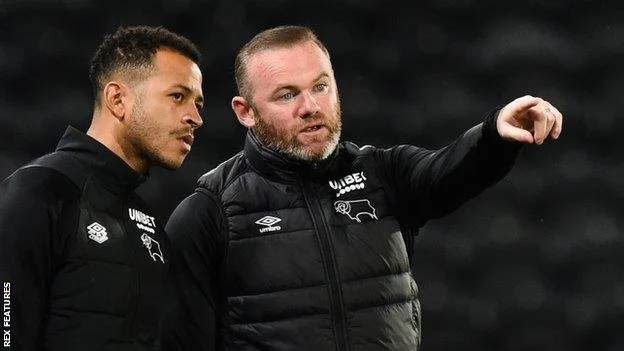
Rosenior as Rooney’s assistant manager at Derby. Image via BBC
Rosenior’s stock was rising after the Derby stint. Rooney had spoken highly of him throughout their time together and it was evident he was more than capable of managing in the EFL. Hull City came calling and once again Rosenior surpassed expectations by turning a rather dismal Championship side into a playoff contender over the space of 1 and a half seasons. During this process Rosenior oversaw the development of young players Fabio Carvalho, Jacob Greaves, Ryan Giles, Tyler Morton who became the core of a youthful and exciting Hull side that missed the playoff spots by just 3 points.
Greaves found it hard to hide his admiration for his then manager, saying “He’s brought in some new ideas, been kind of like a breath of fresh air which the lads have all really took to... you can kind of see how much the lads are enjoying it. All the lads are buzzing and it’s a really good place to be in," in an interview with the Guardian. Although mysteriously sacked at the end of the 23/24 season, Rosenior can be hugely credited for developing so many youngsters and installing a culture of fearlessness and excitement into the MKM stadium.
We’ve talked a bit about his journey, but what is it that makes Rosenior so highly thought of across Europe? Why has he found it so easy to find success as a manager?.
In an interview with EFL.com, Rosenior explained his ethos and ideas: “As far as I’m concerned, the person comes before the football. You have to have the right morals to play for this Club and to work with me and my staff. I look for honesty, integrity and hard work in my players and the type of person is really, really important to me. For me, being a manager is mainly about people skills. It’s not always about the x’s and o’s on a tactics board, it’s about developing relationships and getting buy-in from everyone at the Club in what you’re trying to do.”

Carvalho managed 9 goals and 2 assists in 20 games for Hull under Rosenior, the best rate of his career. Image via @HullCity on X
Rosenior’s reflection on his philosophy is refreshing. In a world so obsessed with tactics and analysing absolutely everything down to the finest details, the core of football has been forgotten. It’s about the way it makes us feel and Rosenior understands that better than most. Coming from a humble background in South London, qualities such as honesty, humility and integrity are core to the Strasbourg manager’s principles in everything he does. To him, he cannot find success on the football pitch until he has established a strong and emotional connection with his players.
And that’s exactly what makes Rosenior so different and likeable. He doesn’t see them as robots designed to thoughtlessly carry out instructions, like some do. Rosenior treats them as people first and people often function better when they feel understood and cherished in whatever environment they’re in. The former Brighton player speaks with real conviction and emotion. He articulates himself beautifully to the press and to his players. He’s approachable and naturally likeable which are qualities not every top coach possesses. By treating players as real humans with emotional and psychological flaws and struggles, Rosenior accepts and welcomes the baggage that comes with being a top-flight professional in this day and age. He told the Guardian: “I want my players to be open. I want them to be vulnerable, and I allow myself to be vulnerable as well with them. From that, you can create really close connections with your group and you build trust, which is everything.”
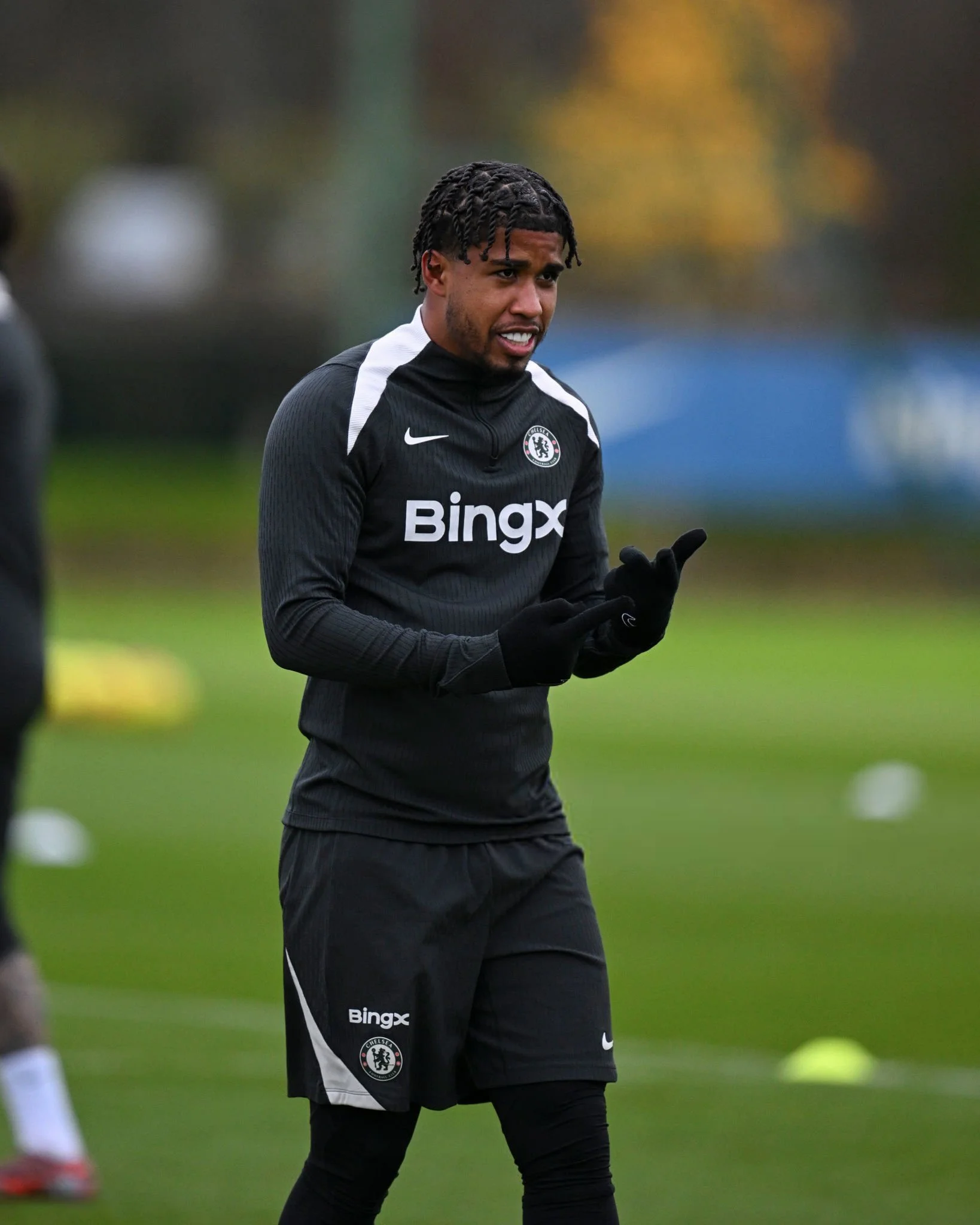
Andrey Santos is one of the biggest winners from Rosenior’s arrival. He was his captain and most important player at Strasbourg. Image via @Bluecoxtra on X
You can see why, with this philosophy, Rosenior has made a name for himself as a coach who is brilliant at developing young players. He understands the human-side of them as well as the football-side. All great managers, no matter how robust and restrained they seemed, all mastered this balance. Sir Alex Ferguson, Pep Guardiola, Ancelotti, Mourinho (at the beginning). Listen to how their former players talk about them, how they revere and would run through a brick wall for them with no hesitation. Rosenior’s players talk about him in the same way and that’s a good sign.
And BlueCo were surprisingly smart enough to see this too. He was appointed head coach in June 2024 as soon as Strasbourg were taken over and they haven’t looked back since. As previously mentioned, Rosenior is currently in charge of the youngest squad across the continent. He’s been mentoring and guiding some of the brightest and most sought after players in the world and has seen a plethora of them massively improve before him.
My two favourite cases of player development come at the hands of Diego Moreira and Valentin Barco. You may recognise the name of the latter as he was on Brighton’s books for a brief period of time, but Moreira may be a bit more niche.
Both were players who had found it hard to live up to the hype they were receiving in their academy days. Moreira as a flashy and direct right winger and Barco as do-it-all full-back with a wand of a left foot.
21 year old Moreira, who represents Belgium, was signed from Benfica by Chelsea but failed to make any real inroads into the first-team. Strasbourg took him off Chelsea’s books and under Rosenior, the boy took off. One look at him and it was evident Moreira potentially didn’t have the composure in the final third to really make it as a winger, but he had unbelievable work-rate combined with real pace and skill. So Rosenior converted him into one of the most coveted young full-backs in Europe.

Diego Moreira managed 7 assists in Ligue 1 in 2024/25 - the 2nd most of any defender. Image via @Ligue1_ENG on X
Barco, who failed to make any headway in the Premier League as a left back, is a diminutive figure whom most in England discarded as too small or not physical enough to reach that top level. Rosenior made no note of these comments. Instead, he took Barco under his wing and told him that he doesn’t see him as a left-back. The Argentine’s outstanding traits are his passing, press resistance and tenacity. Why waste that out wide? Rosenior saw an all-action midfielder with license to roam where he pleased because of the quality he possessed. Now, Barco is one of the most impressive young central midfielders around.
Where everyone saw two decent young players who were perhaps missing that final bit of spark to go far in their careers, Rosenior took a different perspective. By focusing on what they’re good at and what they can offer his team, new roles were carved out for each player that maximised their strengths to the fullest. These two examples showcase Rosenior’s philosophy in action. His understanding and dedication towards his players is remarkable and it makes him extremely desirable to play under.
A Rosenior team is daring and positive. They take risks and aim to control possession as much as possible. Only this season has Rosenior gone toe-to-toe with some of Europe’s most impressive managers such as Luis Enrique and Oliver Glasner, and has more than stood his ground by drawing with the former and defeating the other with ease. This season, Strasbourg are taking huge chances with the ball. They religiously play from the back and this does result in turnovers around their box. Goalkeeper Mike Penders can often be found as almost another centre-back in possession which has created problems and huge chances conceded on more than one occasion. They’re brilliant to watch because of the risks they take and if they are able to play out of the press, their quick combinations through midfield and attack are brilliant to witness unfold. Rosenior wants his players to express themselves on the ball and take chances. In an article he wrote 8 years ago, Rosenior talked about managers struggling to strike the balance between winning football games whilst simultaneously entertaining fans. With the way Rosenior wants his team to play, it's evident that keeping fans excited and on the edge of their seats, lingers on the forefront of his mind.
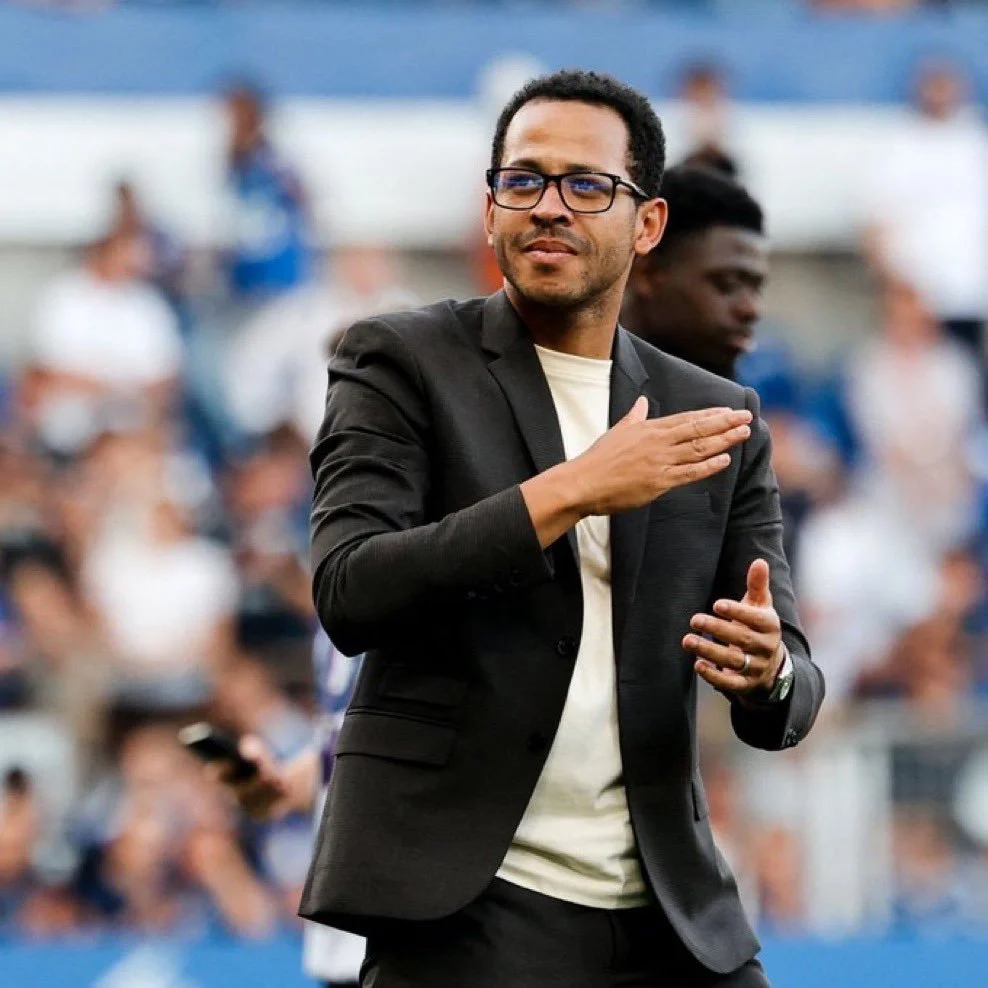
Image of Rosenior via @StevenNickelzee on X
But he isn’t a one trick pony. Rosenior has shown the ability to utilise a more direct approach when plan A fails. In the first half of his first season at Strasbourg, his side were struggling hugely to progress the ball from the back. They weren’t scoring enough goals and were conceding far too many. The result? In the second half of the campaign, Rosenior lined his team up in a more defensive fashion and stopped messing around with the ball at the back. Strasbourg’s fortunes changed dramatically and they qualified for Europe. Adaptability and initiative, check.
This has been a glaringly positive analysis of Liam Rosenior so far, because I do really like him. He’s a great manager with strong ideas and is an even better person. He’s become a sort of laughing stock on social media recently due to a video of his half-time team-talk as Strasbourg found themselves 2-0 down at half-time to Lille. His emotion and passion was mocked and he was called a ‘school-teacher’ and a ‘clown’. What people fail to realise is that Strasbourg came back to draw this game 3-3. Clearly the hearty speech more than worked.
My appreciation for Rosenior doesn’t mean I necessarily expect him to be a success at Chelsea. He has no experience of managing a big club and Chelsea has proved an incredibly difficult environment for managers to work in since the BlueCo takeover. The Stamford Bridge crowd could well eat him alive if results go badly in the first few games. He’ll be under pressure immediately to deliver results because that’s what’s expected of any Chelsea manager, but his style and approach to management is one that demands patience and time. It’ll be fascinating to see how this evolves in real time.
What am I hopeful about regarding this appointment?
The players will like Rosenior, I have no doubt about it. His man-management style and the way he articulates himself will draw the youngsters in almost immediately. He’s worked under BlueCo for a year and a half now, perhaps the familiarisation with the way they operate will mean less problems in the long-term regarding manager-owner relations. Rosenior’s style won’t take too much time for the players to get used to as it draws many similarities to that of Maresca’s, it’s not a radical change in ideas and so results may not be too dire at the beginning of his tenure. Rosenior also showed a huge appreciation for bringing through academy players during his tenure despite Strasbourg’s heavy spending. Samir El Mourabet (19), was given his debut under the Englishman in August and rapidly became one of the most important players in his side. Abdoul Ouattara (20) has started frequently for Strasbourg this season having been promoted to the first-team last season. Not only did Rosenior give them a chance, but he’s improved them dramatically this season. Maresca was reluctant to play Chelsea’s youth players with only Josh Acheampong featuring semi-regularly for The Blues and with Cobham being one of the best academies in Europe, hopefully Rosenior will utilise what he already has at his disposal, more than Maresca was able to.

Shim Mheuka (left) and Jess Derry (right) are the two players many believe are ready to make the step up to the first team. Image via @TheChelseaSpot on X
Chelsea has been nothing short of a circus since Cleartake Capital took over in 2022. There’s every chance that Rosenior, like the managers before him, is unable to deal with the scrutiny and micro-management that is thrown his way by the directors. Perhaps Chelsea is unsaveable until the people at the top are replaced, time will tell. But Rosenior offers hope because he is a young, forward-thinking manager with the right ideas. He’s a great man to take inspiration from because he sees the best in everyone. He deserves to lead such an ambitious and youthful project, but whether the jump has been taken too quickly remains the primary concern because Chelsea isn’t a club that cares about ‘nice’. All the fans want to see is winning football. Hopefully he is able to translate all of his bright ideas into success because seeing a young, black coach with a good heart being the trailblazer for a new dawn at Stamford Bridge is what it’s all about.
