Mircea Lucescu: An ode to a footballing pillar and a glimpse into the eternal foundations he lay
10 June 1970. Guadalajara, Mexico.
8AM in the morning. But you would of had no idea as the feverous atmosphere inside the Estadio Jalisco reached new levels and the players were welcomed onto the pitch. The sun was shining, kids were screaming with excitement, adults - who may as well have been kids for those 90 minutes, were glistening.
It was the World Cup and it was the 3rd and final game of group C. Brazil, who were the pre- tournament favourites, were rampant. They had put four past Czechoslovakia and defeated England 1-0 in a memorable game in which fans later referred to as ‘the final before the final’. They were up against a Romania side who few had paid attention to before the tournament. A narrow loss to England in the first game followed by a terrific comeback vs Czechoslovakia in the next, nothing special - but enough to show Brazil they weren’t going to let them run them over.
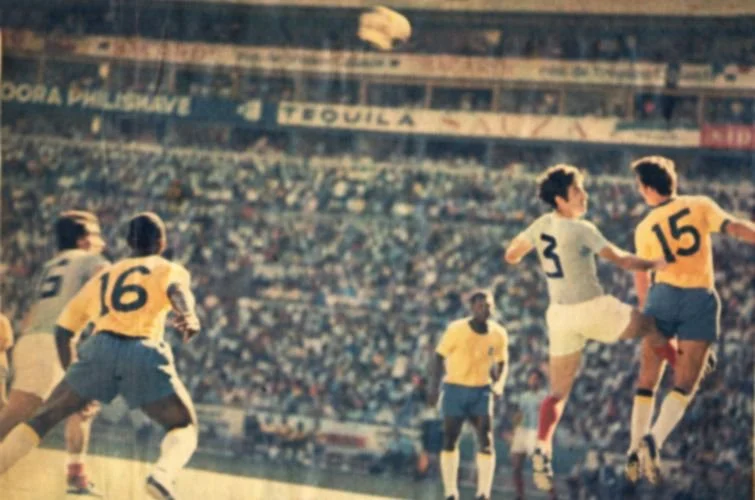
Brazil vs Romania 1970 - Image via wikimediacommons.org
The two sides played their hearts out in one of the games of the tournament. It concluded with a 3-2 win in favour of Brazil but also triggered a global sense of respect for a fairly modest Romanian outfit which many fans knew little about before the tournament. The fearless and attacking football they displayed in this game was enough for them to be remembered decades later and though they failed to make it out of the group stages, they had imprinted their mark on their tournament in noble fashion.
In this Romania side, was one man, their captain, a technically gifted, fleet-footed winger - who for the life of him could not shake the feelings he had felt during and after this game. A tour of Brazil 3 years prior had planted the seed but by the time this game was over, it had blossomed.
The man was Mircea Lucescu and he was head over heels in love with Brazil. And it was a love which burnt so bright it lit up a whole country, changing the way they viewed football forever.
Mircea Lucescu is one of the most important and most beloved men in the history of the sport and on the 7th April 2026, at the age of 80, he sadly passed away. One of the greatest and most influential managers of the past century with more trophies than most in history, there’s little shade you can throw on the Romanians name. Everyone’s aware of his creations, but barely any realise it was him who created them.
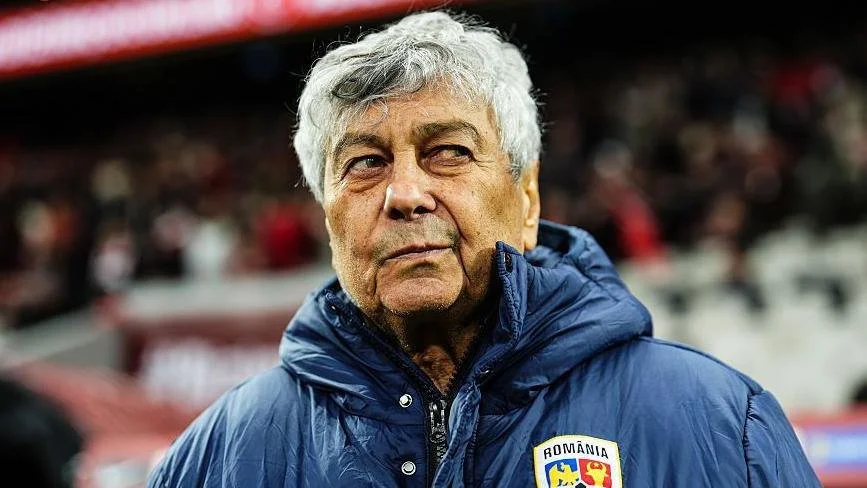
Mircea Lucescu as manager of Romana - Image via BBC.com
There are few men in history who loved football as much as the Romanian. In order to get an idea for his passion for the game, understand that he, at 80 years old, knowing full-well that he was very ill - sat in the manager’s dugout, aiming to steer his country towards a victory over Turkey in the semi-final of the World Cup Qualifiers.
“I can’t leave like a coward,” he proclaimed after iterating it was ‘his duty to Romanian football’ to stay in charge.
Romania went on to lose to Turkey 1-0 in a game which even the most optimistic of their fans would’ve thought was slightly beyond them. But it was hard to fault a team led by such an admirable manager with a footballing CV which could rival the very best of them.
Before we talk about Lucescu’s infatuation with Brazil and the flowers it bloomed, it would be erroneous to not talk about all the other feats he accomplished on his way to becoming one of the most loved characters in the game.
61 years in the game. 27 as a player and 47 as a manager, with some overlap where he was a player-coach at Cirvunul Hunedoara. As previously mentioned, just as he was a phenomenal coach, he was also a phenomenal player. A right-winger known for his attacking, direct ability and willingness to try and create something. 64 caps and 9 goals for Romania, captaining them at the 1970 World Cup. In the nation’s capital, at Dinamo Bucureşti, he won 7 trophies and became immortalised in their club’s history.
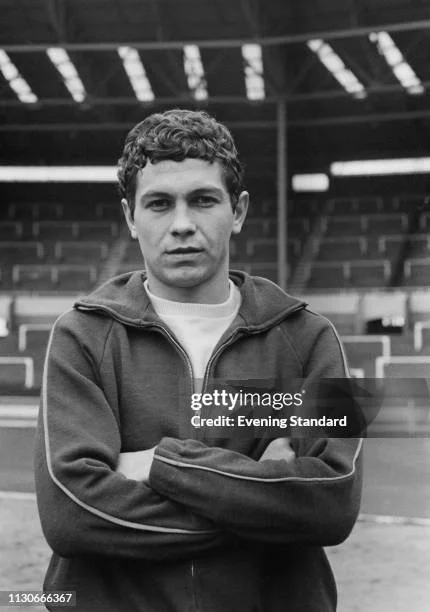
A young Lucescu posing for a picture at the old Wembley
His attitude to playing the game quickly became his attitude for managing it. From the beginning, Lucescu wanted to play fast, free-flowing attacking football which would get fans off their feet. When Lucescu stumbled into a player-coaching role at Corvinul Hunedoara, a club he only moved to due to his wife’s fear for their safety after a catastrophic earthquake hit Bucharest - it was evident he had a gift for it. The side, a fixture of the Romanian third division, was catapulted to competing in the UEFA Cup in the space of 5 years. It was a feat so impressive, it was demanded Lucescu became the head coach of his country.
5 years he remained at the helm before returning to his beloved Dinamo Bucureşti team as a coach. Then Lucescu got a taste for Italy. Stints at Pisa, Brescia and Reggiana followed before a brief return to Bucharest, this time at Rapid Bucureşti . It was from there he left to Inter Milan and with a squad boasting the likes of Roberto Baggio, Adrea Pirlo, Nwankwo Kanu, Diego Simeone, Javier Zanetti, Taribo West and Ronaldo - they won their first 5 home gomes and scored 25 goals in the process. Massimo Moratti, Inter’s current president - said it was the best he’d ever seen the club play.
However under this seemingly perfect marriage of club and manager, problems already began. The Inter dressing room was sinking with the weight of all the stars’ huge personalities and results were suffering as a result. Inter found themselves in the mid-table positions and for a club of that side, with those players - such a thing was inexcusable. Lucescu had little time to build anything of real substance and he was sacked after 4 months, replaced by Roy Hodgson.
Lucescu kept walking. In the 4 years that followed, Lucescu managed 3 different clubs: Rapid Bucureşti, wherehe spearheaded one of the most important trophy campaigns in Romanian football history, revitalising the relationship between the club and its fans and becaming the catalyst of a period of domination - and Galatasaray and Beşiktaş too. At Galatasaray, he took over from Galatasaray’s greatest ever manager Faith Terim and won the UEFA Super Cup, beating Real Madrid 2-1 in the process. But failure to win the league saw his contract ripped up and his talents taken to Beşiktaş.
And whilst at Beşiktaş, the Romanian found out just how sweet revenge can be. He arrived after they’d just finished 4th in the league. By the time he left, the Turkish club had won their first Super Lig in seven years, finishing 7 points above Galatasaray in the process.
And it was from Beşiktaş, Lusescu would walk into another job where another club hoped he could turn their fortunes around, just as he had done so many times before. But what the club wasn't ready for, was the sheer scale at which he would change their destiny and rewrite their history in real time. Nobody would have realised that a dynasty was beginning when he arrived. Nobody knew what was in store for them.
After claiming 16 of the 36 trophies he would eventually go onto win, 2004 was the year Mircea Lucescu joined Shakhtar Donetsk.
Before we go any further, we must go back. Back to 1967 where the Romanian national team were touring South America. To put into perspective how much of a radical experience it must’ve been for those Romanians, it must be remembered that this was during a time where the country had just come out of a 20 year period where they lay in the Eastern bloc, as a satellite state of the Soviet Union. Travelling abroad was rare in those parts and in those times, but going to South America… They may has well been boarding a spaceship to Mars.
Being propelled from a structured, controlled world - in both a football and cultural sense, into such a joyful and expressive environment, would have probably evoked such strong feelings from these players, and none more so than a 22 year old Mircea Lucescu.
The tour served as preparation for the 1968 Euros and eventually the 1970 World Cup. Games were played, which we know little about, and Lucescu was introduced to a world which rivalled how he viewed the beautiful game. A winger notorious for his directness and attacking ability, he spoke of how much he admired the ‘inspiration, creativity and virtuosity’ of Brazilians when he saw them play for the first time. 3 years later, after Romania’s 3-2 defeat to Brazil, Lusescu’s love for the country was dizzying.
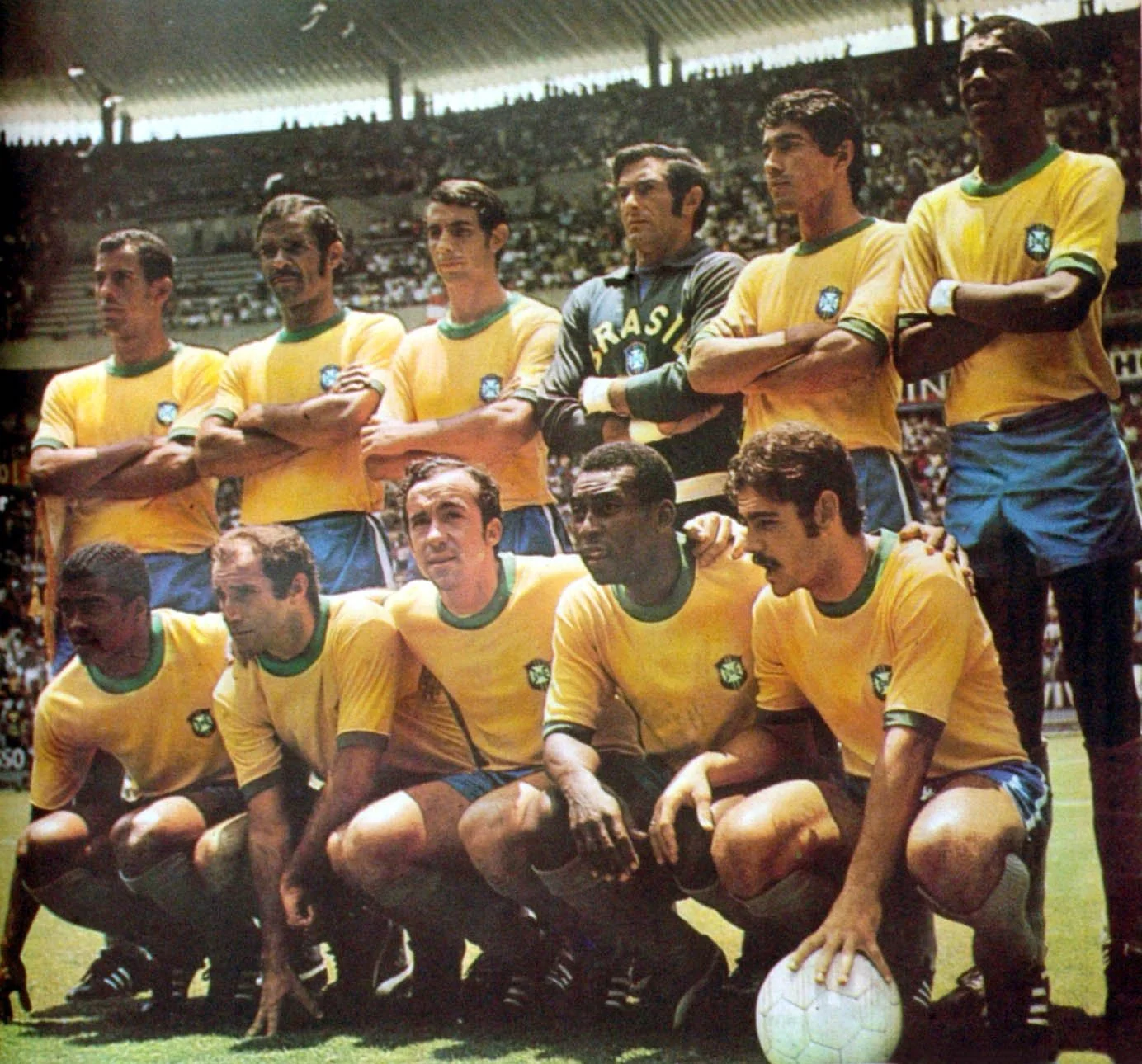
The Brazil 1970 World Cup winning XI - Image via Wikepedia
To him, Brazilians spoke a common language and feel the game the same way. He promptly became a Fluminense fan and set his sights on learning Portuguese. In fact, Lusescu was extremely close to joining Fluminense due to how much he had impressed during the Brazil game, however the state of Romania didn’t allow him to leave.
It wasn’t until 30 years later, still likely sore from the fact he was never able to play in Brazil, Lucescu brought the Samba country to him.
Rinat Akhmetov was one of the richest men in Ukraine and in 1996, after the death of Shakhtar Donetsk owner Akhat Bragin due to a stadium bombing - he was given the keys to the castle. Akhmetov had a vision. He wanted Shakhtar to be one of Europe’s finest teams and he wanted them to play fun and attractive football whilst they were at it. To carry out this vision, he needed a manager who knew how to marry success with entertainment.
8 years later, after vast amounts of money spent, numerous managers and a vision that was flailing, Lusescu’s phone was ringing. Akhmetov explained his ideas but Lusescu wanted to go bigger than that. Not only trophies and play good football - he wanted Brazilians to be at the heart of it.
Beforehand, the opportunity was never there for Lusescu to build a club around a country he held so dearly, but due to Akhmetov’s deep pockets and determination to make this club great, it was the perfect time to unleash his magnum opus.
Lusescu wanted Shakhtar to be the most Brazilian team in Europe and due to his preference for young players, not only because they could create high sell-on value, but also because it was easier to change their minds rather than players who are 30, Shakhtar began to scout young
And with a clear direction and plan in place, the ball got rolling. Jadson, Ivan, Elano all bought from the Brazilian league in 2004. Fernandinho, Leonardo, Willian, Luiz Adriano in the two years that followed. Quickly Shakhtar Donetsk were building a samba-ridden core in the vision of their Romanian head coach.
And this was quickly followed by a period of dominance which has only been rivalled by a few teams in Europe this century. Shakhtar, now the most Brazilian team in Europe, won 8 league titles in 12 seasons, a host of league and domestic super cups and most notably, the 2009 UEFA Cup which featured 5 Brazilians all in the starting lineup.
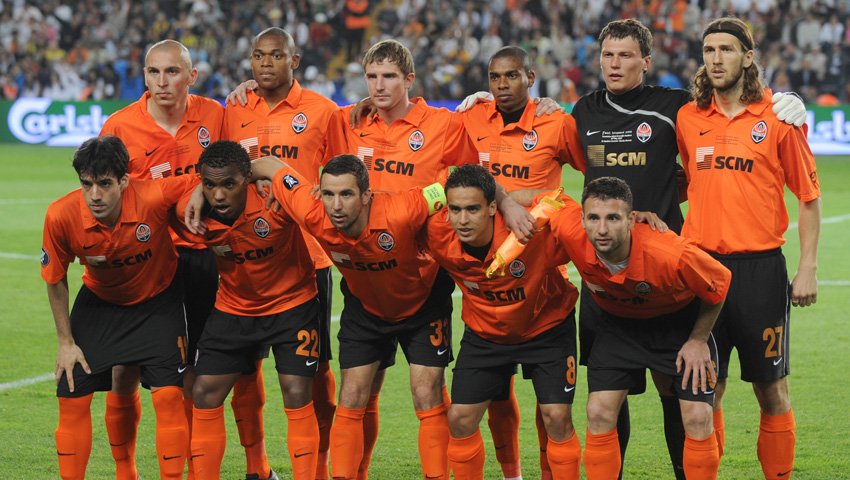
The 20008/9 UEFA Cup final starting XI - Image via Shakhtar.com
Akhmetov’s dream was brought to life. Shakhtar were now technically one of the best teams in Europe with a trophy to prove it. The likes of Douglas Costa, Taison, Alex Teixeira, Fred, Ilsinho and others had featured in this time before making a name for themselves elsewhere.
Lusescu’s method of slowly bedding in his players; forbidding them to speak to the media; limiting their playing time until he believed they were ready and creating a Brazilian family environment away from the pitch, worked wonders. Brazilians in Ukraine shouldn’t have worked together but his meticulous and emotional approach made sure it did.
As well as dominating Ukrainian football up until 2014 where he left, Lusescu introduced the country to something new. A stereotypical Ukrainian team was rigid, hard-working and pragmatic. Pre Lusescu, Dinamo Kyiv - the most well-known Ukrainian club at the time, had earned their stripes being just that. But when the Romanian manager arrived with his Brazilian kids, doors were opened to a world of possibility most thought wasn’t possible in Ukraine.
The league slowly turned from the extension of volatility and pessimism of Ukrainian politics in which it was, to something brighter. When teams begin to dominate in such a way, everyone else can’t help but follow. Soon other clubs were beginning to flock to South America to get their fix. Lucescu had turned the league on its head and they couldn’t have been better off for it.
Like many of the greatest inventors in the world whose names have been slowly eroded with time, Lucescu created something far bigger than himself which will continue to live on evade when our memory of him fades. That’s legacy. That’s one of the greatest coaches of all time who’s won the third most trophies of all time, who joined a list with Sir Alex Ferguson, Carlo Ancelotti, Arsene Wenger and Jose Mourinho as managers to coach 100 Champions League games. Someone who’s won league titles with 2 different in 4 different countries; played, captained and managed his nation whilst being one of the most highly thought of and loved individuals in the sport.
Lusescu loved football and you can bet your arse it loved him back.
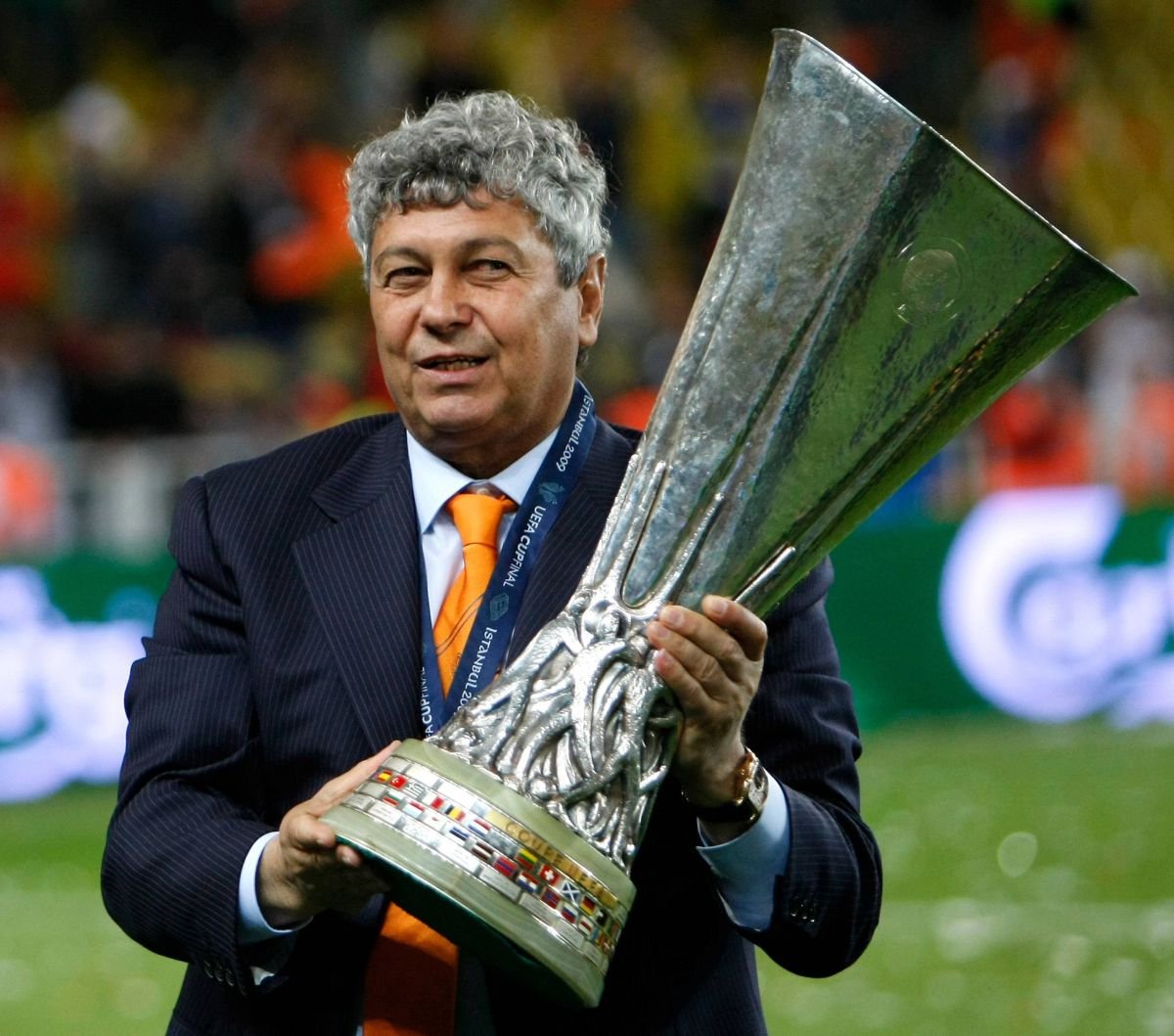
Mircea Lucescu celebrating the UEFA Cup win in 2009 - Image via Simleu Silvaniei
And now, as we turn our attention from the past to the future, from the long lineage of those who came before them, there’s a new generation of Brazilians who are beginning to turn heads in Ukrainian football. These players, and all the ones that come after them - are an extension of Mircea Lusescu’s legacy and what he was able to create in Ukraine. All the trophies they have won and will go on to win, part of it can be traced back to a Romanian who fell in love with Brazil.
Shakhtar’s latest wave
Alisson Santana ( RW | 20 years old | 6ft | 24 games played, 7 goals, 6 assists | 9 g/a in 11 European games
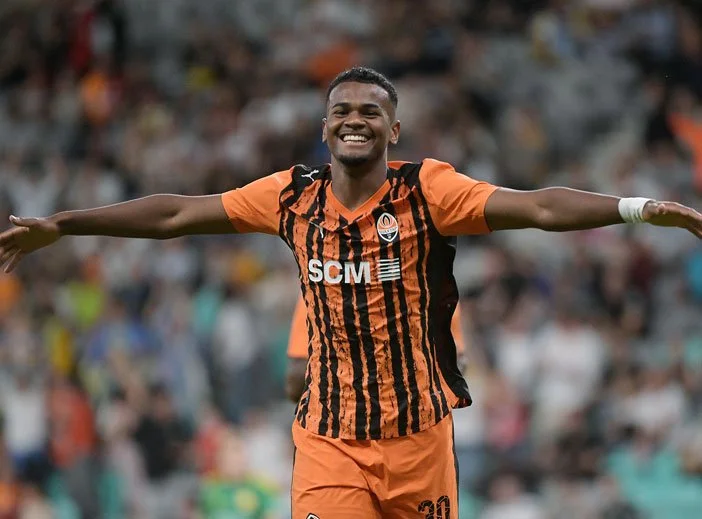
Image via Shakhtar.com
A product of the Atletico Mineiro academy and their third most expensive transfer sale of all time, Alisson spent nearly half of the 25/26 season out with a metatarsal injury. Only coming back in February, the right-winger has started right where he left off.
Having already played over 40 games for Mineiro and impressing scouts with his displays in the Copa Libertadores, Shakhtar fended off reported interest from Arsenal and Leicester to secure the Brazilian’s signature.
Alisson is over average height for a winger. He’s got an athletic build with wide shoulders and strong legs. The result of this is a powerful forward with an explosive left foot.
In this Shakhtar system, currently moulded by manager Arda Turan (yes, that Arda Turan), Alisson finds himself more often than not glued to the touchline. A winger who likes the ball to the feet, he uses his dazzling quick feet and sudden change of direction to barge yet and simultaneously weave past his opponents. He keeps his shoulders over the ball at all times, meaning he’s usually in control. When running at pace, the ball stays close to him and that’s a good sign. Less of a creator and more at peace when he’s driving at defenders, the 20 year old’s feather feet make him hard to stop when he gets going.
You’ll typically find him receiving the ball and trying to cut in towards goal to get a shot off on his left foot. He’s a good finisher - it’s why he’s hit the back of the net 7 times this campaign. He shoots cleanly with power and when in the box he goes low and hard. His lack of a right foot makes him slightly predictable but if you show him on the outside, he can use his power and change of speed and blow by you. Though he’s reluctant to use his weaker foot, he is capable with it. Given the space and opportunity, Alisson has shown the ability to float crosses in on his right and has created a host of good chances in the process.
He’s easily a European level player, his performances in both the Europa League qualifiers and Uefa Conference League has proved that. The question is, just how high can he go?
The lack of sheer top-end pace and ability to not really affect games unless he’s dribbling past players - may cap him slightly. But the feet and ability to fire off powerful shots when given the chance, means he can be a key cog in a side with aspirations to play in the Champions League.
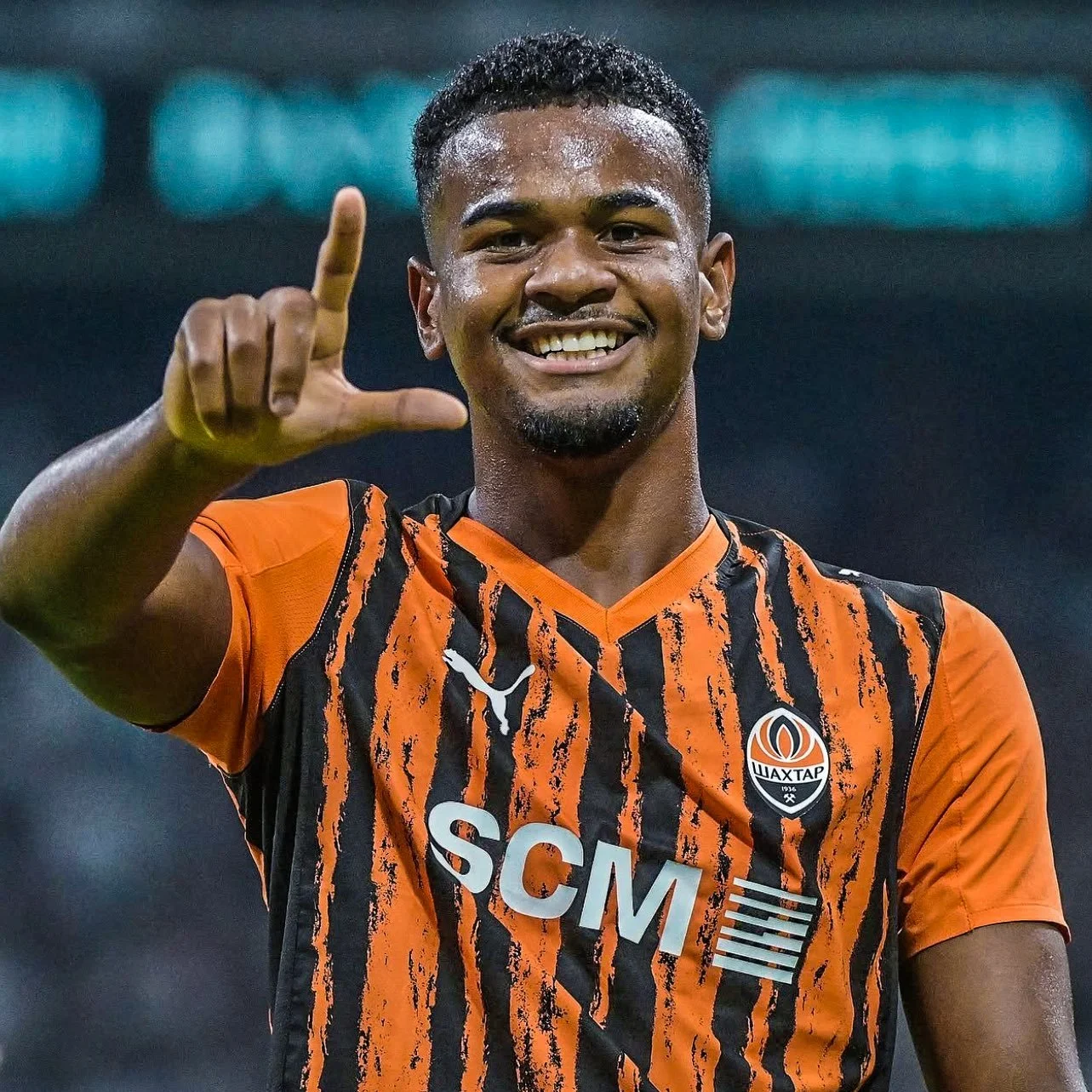
Image via @eurofootcom on X
It’s also clear the Brazilian has little interest in defending. Often he’ll let his full-back run loose and doesn’t make that much effort to stop players from going past him. Maybe Turan has given him the luxury of not needing to apply himself diligently off the ball as long as he’s performing with it, but if he wants to hit that next level, it’s something that needs working on.
Sometimes, he can be slightly nonchalant about receiving the ball. His first touch, most of the time - is great, especially when he’s positioned out wide directly facing his man. But, when he drifts inwards, it can let him down. Sometimes, probably due to a lack of familiarity to his surroundings, it’s loose and turns into a duel or possession lost but when he gets it right, and it gives him space to combine and drive into a vacated area, it’s a great watch.
Still raw, but only fresh from leaving his teenage years behind him, Allison is direct, and exciting to watch. He’ll get you off your seat no doubt, and that's what Lucescu wanted when he and Shakhtar turned their sights to Brazil all those years ago.
Vinicius Tobias(RB) | 22 years old | 5 ft 9
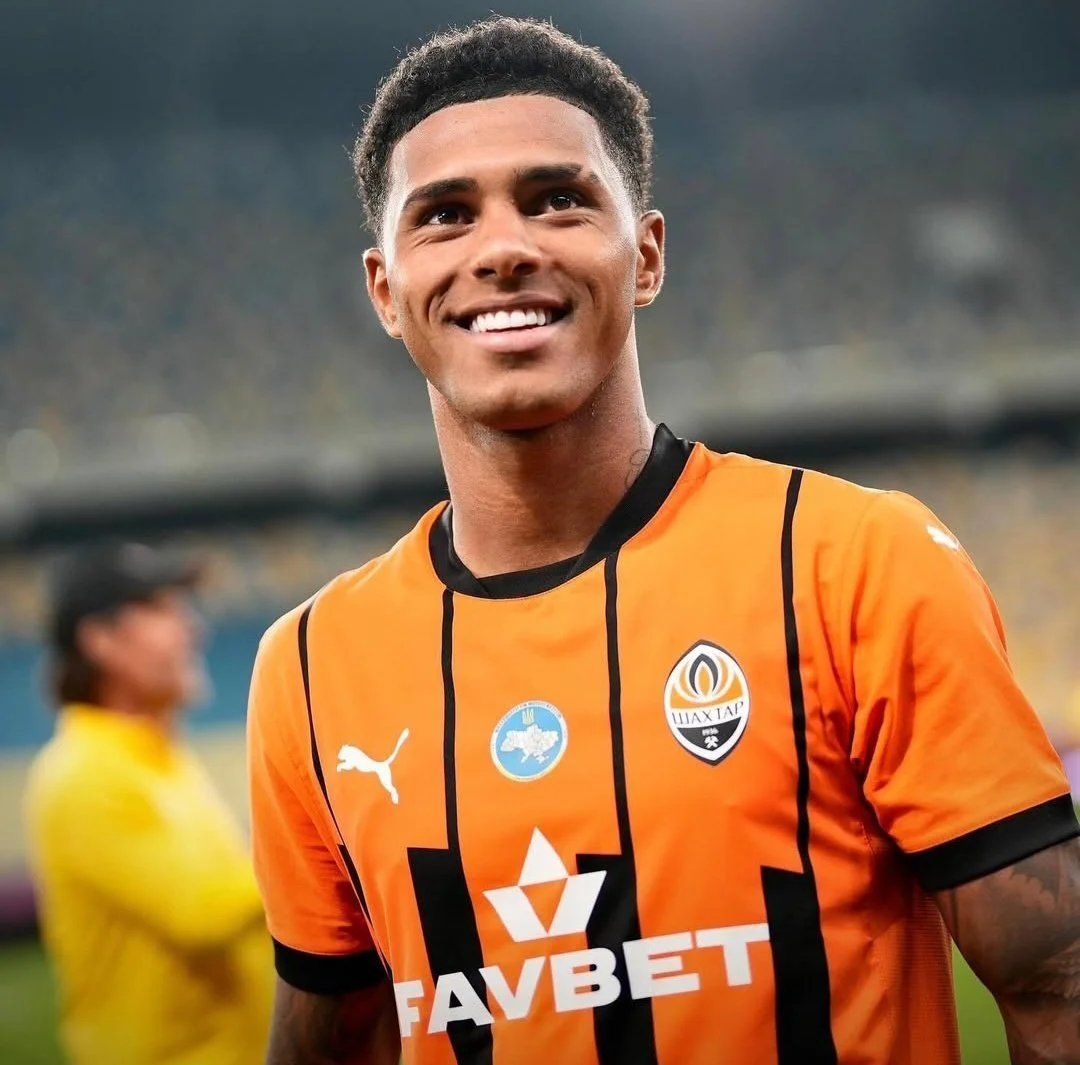
Image via @olheirosudaca on X
The story of Vinicius Tobias is incredibly interesting. At seventeen years of age, without a single senior minute to his belt, he was snapped up by Shakhtar due to impressive performances for Brazil at the U15 and U16 level. And upon arriving in Ukraine in 2022, he was promptly turned away as a result of the explosion of the Ukraine War.
UEFA ruled that any foreign player in Ukraine must have their contract suspended and Tobias’ talents meant he found himself in the hands of Real Madrid Castilla in 2021/22. The right back was loaned out to Los Blancos for two and a half seasons and in that time, he became a fixture of their academy side, playing 60 times.
In fact, then 19 year old was impressing to such a high degree at La Fabrica, he was awarded with a first-team start in the Copa Del Rey in a 3-1 win against Arandina CF. 80 minutes played, 7 passes into the final third, 7/10 duels won and a 90% pass accuracy you’d think was enough to stick around at Real Madrid, even if it meant riding the bench. Apparently not. Tobias returned to Shakhtar in the 2024/25 season, a new player with the experience of playing in one of the most trying academy environments on the planet.
So it’s now no surprise that Tobias is impressing in Ukraine. As a youth player, he hardly ever played as a right-back, instead finding himself as a right-winger or central midfielder due to his technical ability. But, like all the other great full-backs in football, he stumbled into a position he was alien to - and got stuck there.
As football advanced and full-backs became game-breaking tools in a coach’s arsenal, Vinicius Tobias’ abilities on the ball meant he suited the inverting/overlapping/right-centre-back hybrid that so many coaches are fixated on needing in a player. And at Shakhtar, in any given game, you’ll see him performing all of these roles.
Tobias is clearly an intelligent footballer. He moves the ball quickly which shows he’s always thinking. He puts a lot of attention into every touch and pass and has the ability, through being moulded in the streets of Brazil and one of the best academies in the world, to get himself out of difficult areas with nice little anecdotes of creative quick-thinking. Whether it’s a nutmeg or snappy pass, Tobias’ on ball ability shows he’s a high-level footballer.
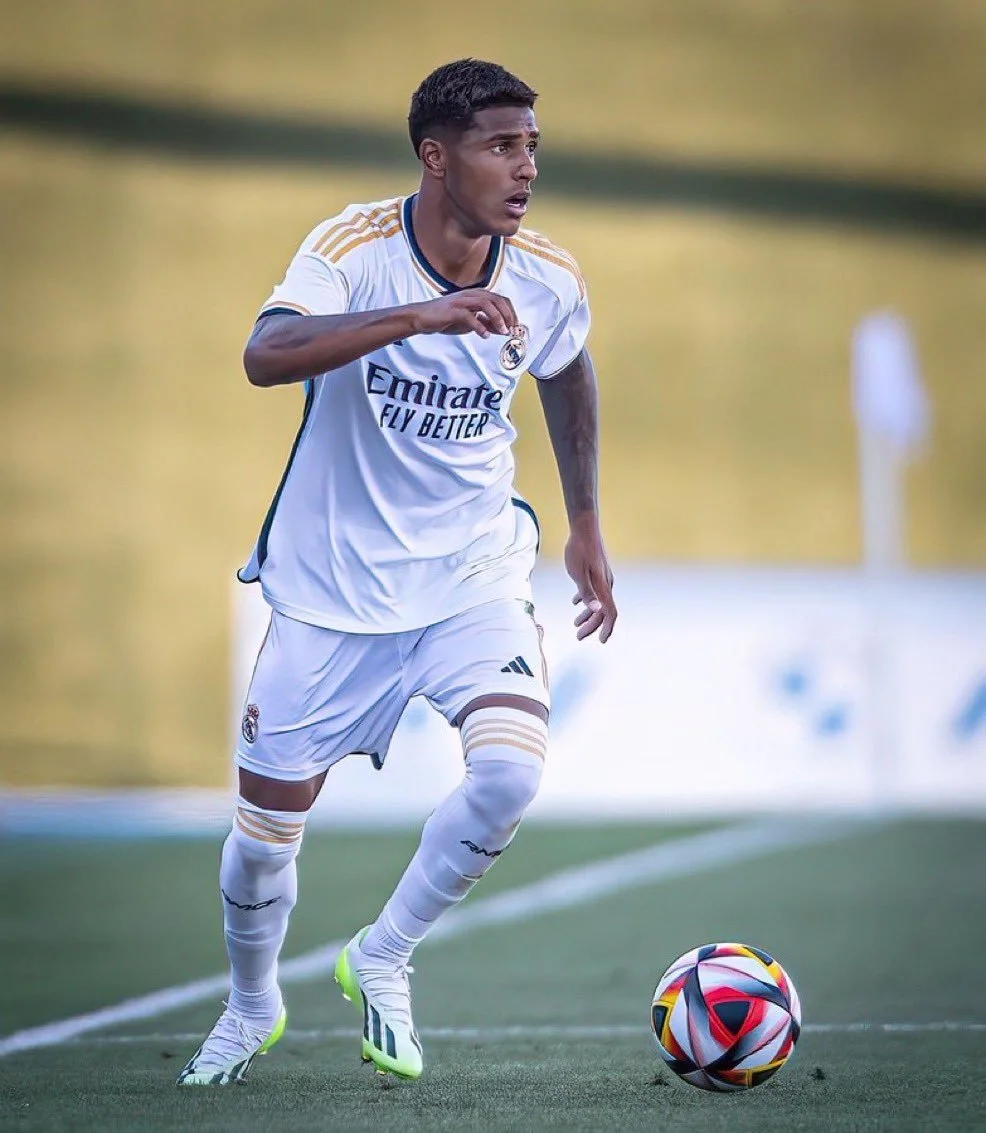
Image via @ZachLowy on X
His chemistry with Alisson Santana is also notable. The two Brazilians are often combining with each other in a series of one-touch passes to carve through the opposition and it’s very fun when they get it right. Usually Santana stays out wide and Tobias inverts as almost a right-sided midfielder. Sometimes, due to being so synchronised, they’ll swap in a flash in order to create a different portrait to paint.
For all his abilities in possession, Tobias is less capable out of it. In a game against AZ Alkmaar and up against fresh-legged substitute Ro-Zangelo Daal, a nippy and agile Dutch forward - I watched the Brazilian get spun around and left for dead a few times. Maybe it was the fatigue creeping in, hopefully it was, but Tobias wasn’t even doing the basics. Flat-footed, not getting low - that’s 101 of defending 1v1s.
It’s strange, but it’s often the case that Tobias makes a lot of mistakes towards the latter stages of games. If it’s a fitness problem, it can be worked on. If it’s a lack of concentration, then there’s a serious problem. In the second half of the second half, in games against Beșikaș and AZ, he began to dawdle with the ball, failing to respond to oncoming pressure and being slow to recover. It’s a far cry from how he would start games, where he’d at spells be dictating the tempo in whatever position he finds himself in - and it’s a cause for slight concern.
Brazil have a history of being blessed with attack-minded full-backs who weren’t really concerned with defending: Marcelo, Maicon, Roberto Carlos to name a few. Tobias may be following in their footsteps.
Physically, the right-back is fast, but he’s not rapid. He’s also not the tallest or strongest and so there needs to be that real hunger to defend and out-best your opponent. A hunger that may not have been discovered yet. He’s a good mover and has a change of pace, but there’s little chance he’s going to leave someone in the dust in a sprint-race. Hence he has to rely on his technical abilities but luckily for him, he has an abundance of them.
With his fellow exciting full-back and compatriot Pedro Henrique, Tobias offers a range of unique traits in possession. He’s wonderfully talented and his skillset, no doubt, has been shaped by his erratic footballing education. A right-back with a multitude of attacking strings in his bow, in a team which dominates possession where he’ll have many touches - he’ll be flying. But if he ever comes to England or plays in a more transitional side, there’s work which I think, has to be done.
Isaque ( LW/CAM | 19 years old | 5ft 8 | 29 games, 5 goals, 4 assists | 33 games, 2 goals, 2 assists
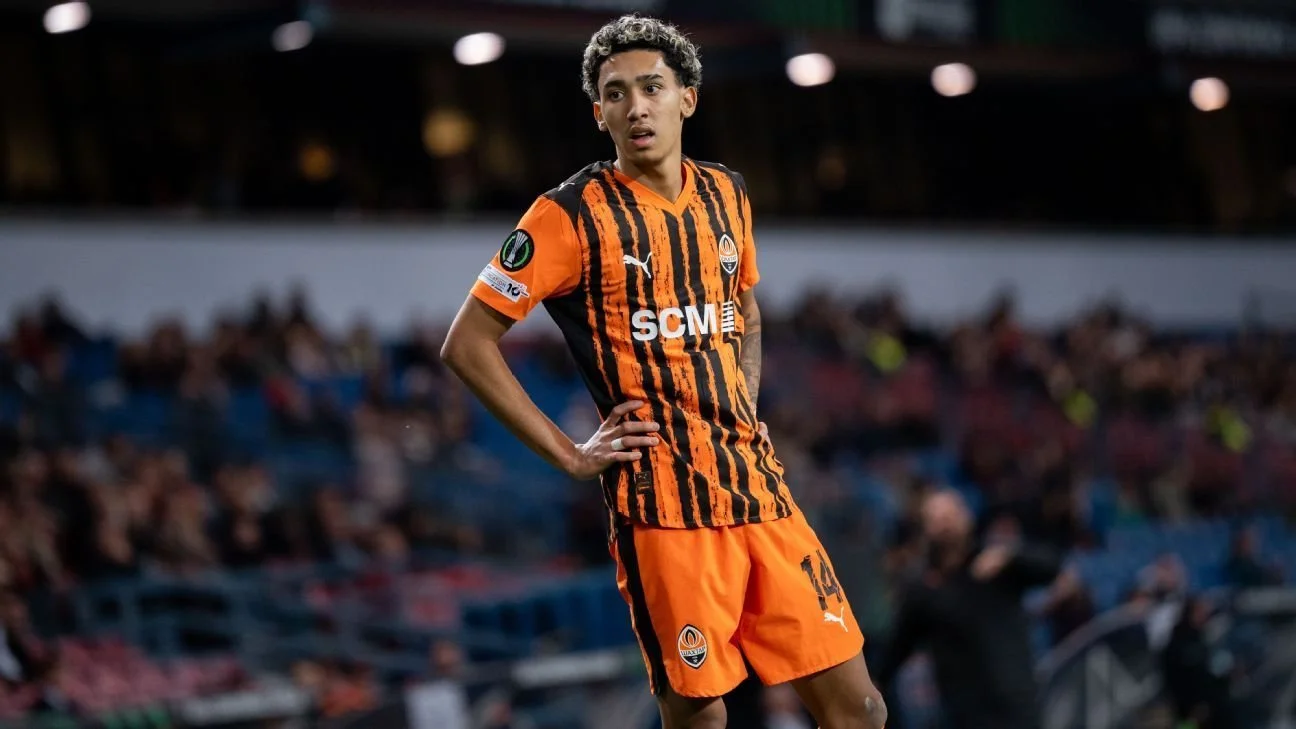
Image via @AntonioMango4 on X
Isaque is the youngest and least experienced of the three players being discussed. But his ceiling leaves theirs dwarfing in comparison.
From the heralded academy of Fluminense, one of the three best academies in Brazil, the right-footed attacker has wound up in Ukraine after a lack of game-time at his boyhood club forced him to down tools. Only 12 games of senior football totalling less than 500 minutes.
But if you scour the Brazilian youth football archives, it’s likely his name will come up more than once. In 2024, as an u17 - he was the star man for his club side as they won the Brazilian cup, beating the famed Palmeiras in the final and scoring a goal in process.
Typically played as a number 10 with freedom to venture out to the left hand side, Isaque’s a creator before anything else. He ventures down avenues that most players wouldn’t see. Whether it’s a way to dance past a player with a stroke of ingenuity, or to clip a delicate through ball over the top and carve open a defence. Luis Campos, one of the most revered sporting directors and infamous talent-spotters in the last decade - explained that elite, truly elite players create what other people will then see. There’s things Isaque does which fit that mould.
Less of the imposing athletic presence which Santana beholds, Isaque is much smaller and much slimmer. There’s a smoothness to his game which radiates effortlessness. It’s the simple way he can decelerate and change direction with minimal touches, sending defenders into a headspin accompanied by unassuming frame and gangly legs which don’t present the vibe of an ‘elite’ athlete. But great footballers find a way.
Though the talent is obvious, his downfalls are too. Isaque is very one-footed. His right foot is a wand but his left lags far behind. Though he is capable of using it when dribbling in tight spaces - when he has room and time, he much prefers using his stronger side. Passing, shooting - mainly done on the right and it’s in a recent game against AZ Alkmaar where Isaque’s abilities and yet shortfalls can be summed up in a five second clip.
He receives the ball in space, drives right for the defender’s soul, then decelerates and changes direction in such a simple fashion and yet the centre-back is facing the other way by the time Isaque shoots. But when he shoots, it’s a shot on his left, and though some credit should be given for him attempting it on his weaker side - it’s abundantly clear how awkward it was for him to do so.
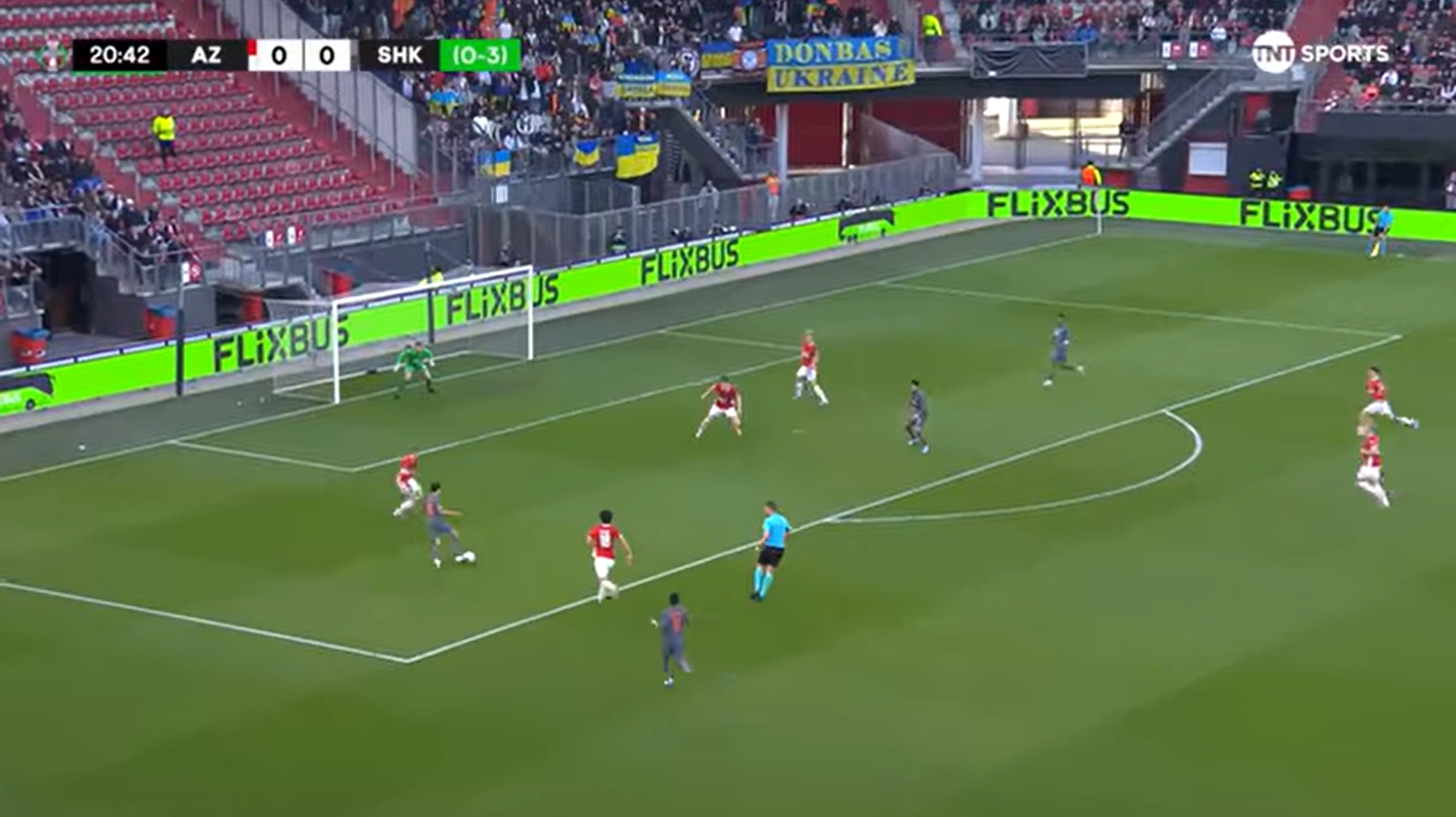
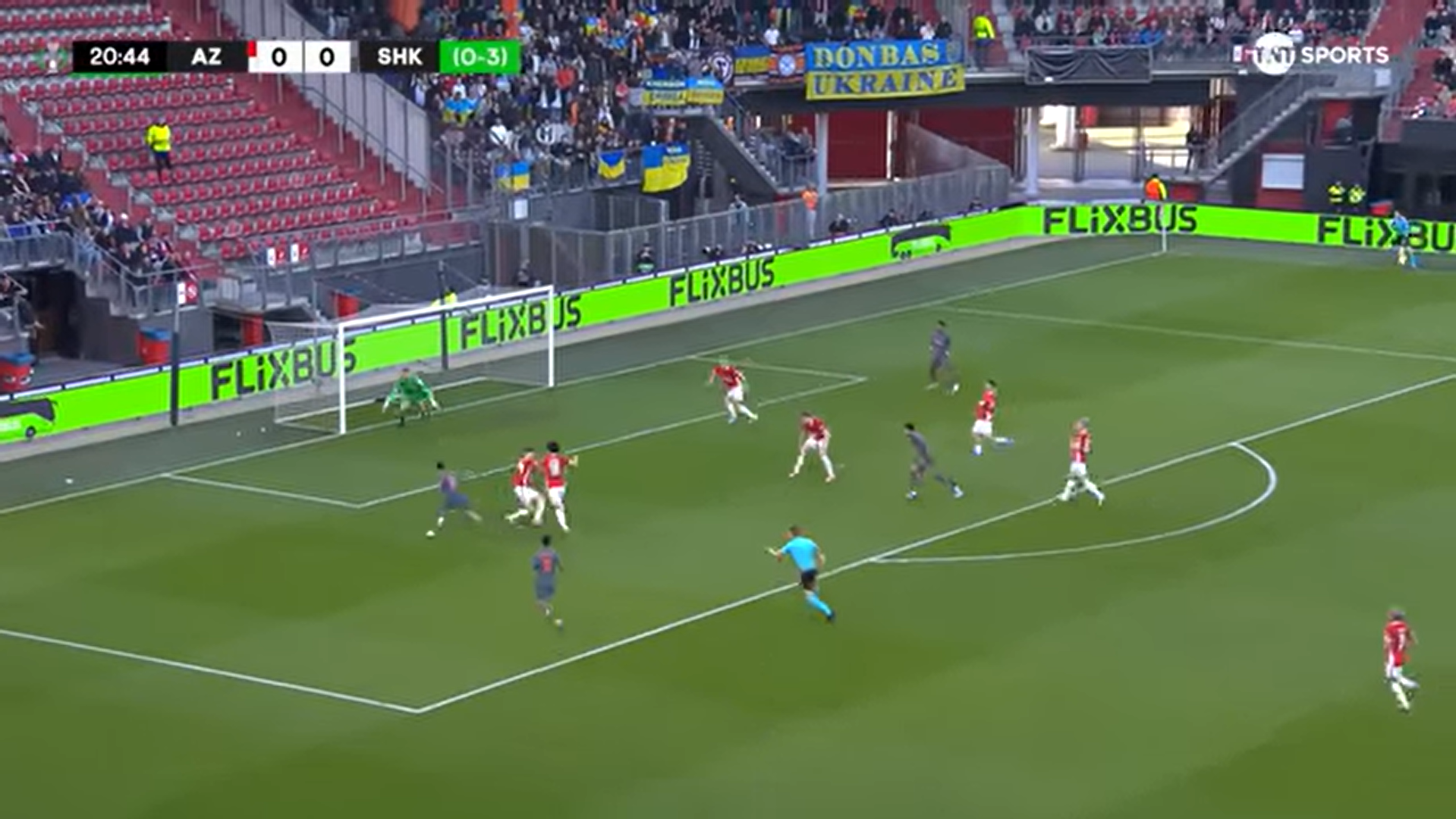
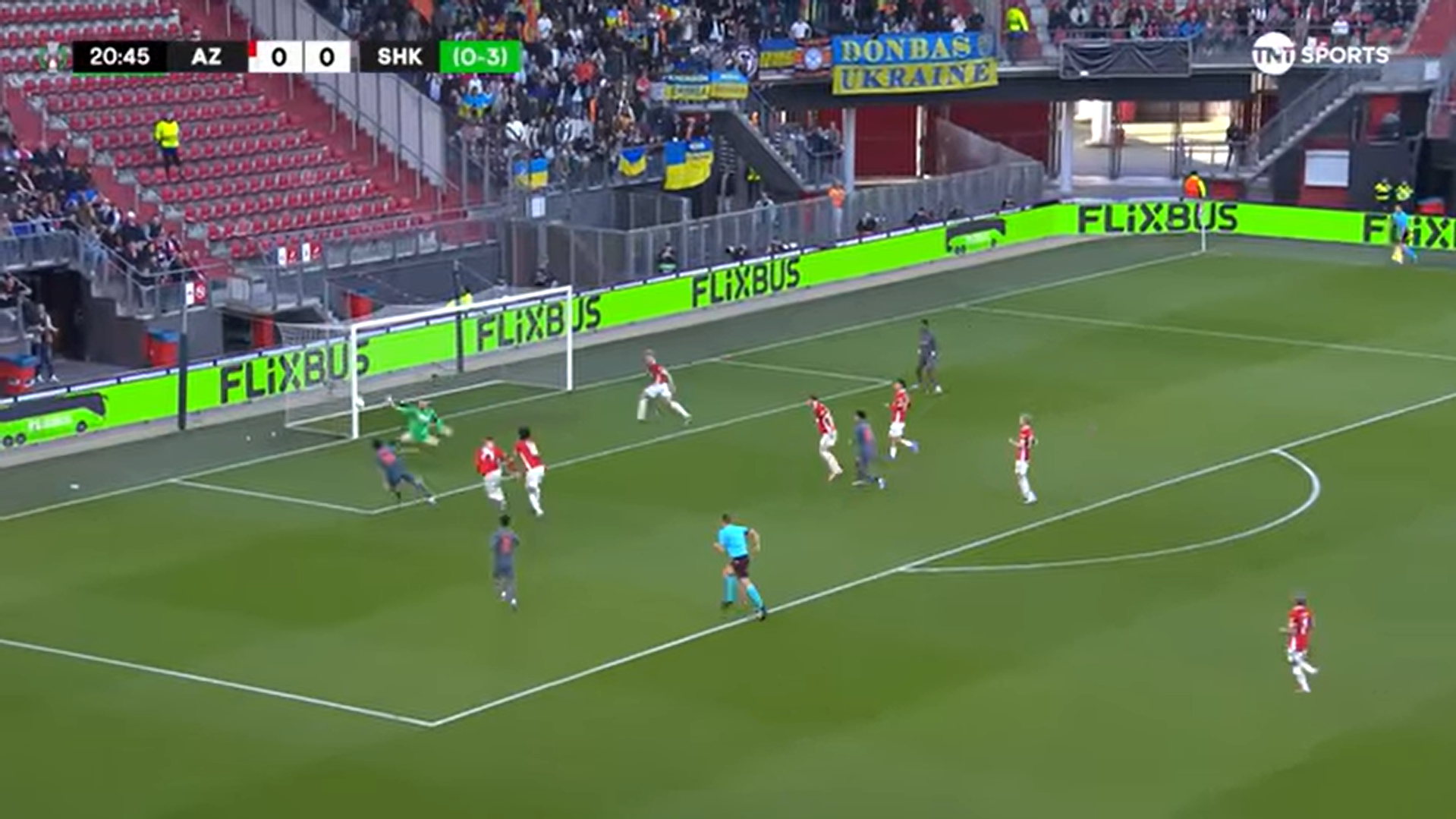
The shot sailed wide of the post, in a position he has to be hitting the target
As previously mentioned, the 19 year old is also pretty frail. Whilst it’s not something which should draw much concern given his age and lack of time in Europe, it might stop him from reaching those dizzying heights at a sooner date. Sometimes you can see there’s a lack of core strength which can make it easy for him to be bullied off the ball. You can also see he knows his limits and tends to duck out of duels or 50/50s if he knows it’s likely he won’t come out on top.
But, as I said, he’s young and he arrived in Europe only this season. It may be a while until he’s developed physically, but in an environment like Shakhtar, where he’s protected by the culture and ethos Lucescu installed and kept away from the scrutiny and pressure of the top European teams - patience is one thing he’ll be afforded.
Isaque has a nice change of pace and moves swiftly. His lack of top-end pace and power suggests that he maybe could/should develop as a more central player as time goes by. Couple that with the fact that his movement in the box to try and score goals has improved this season, and we should be looking at a future high-level number 10 in a few years.
Because Shakhtar have laid down roots so deep into Brazilian soil, it means the pipeline of Samba stars is likely to never stop. The relationships forged and the opportunities created are something no other club in Europe has been able to replicate. As well as the three players I’ve spoken about, I could’ve spent time talking to you about Pedro Henrique (23), Eguinaldo (21), Kaua Elias (20) or Lucas Ferreira (19).
The point is, Mircea Lusescu - supported by Rinat Akhmetov, has turned his love of something great into a legacy that will live on past him and maybe past our lives too. Though he’s passed on recently, his infatuation with Brazil and belief that football should be a vehicle for creativity and hope, has made a physical link you can trace back to that day in 1970, where Lucescu swapped shirts with Pele.
A man immortalised simply out of his love for the game.
